
GNSS Compliance Guide for RTK Receivers, Modules & Antennas
GNSS Compliance Guide for RTK Receivers, Modules & Antennas
Short answer: compliance for high-precision GNSS hardware is not one certificate. It is four separate evidence trails that buyers routinely merge into a single question. Trail one is the supplier's quality management system. Trail two is product-level substance and materials conformity. Trail three is radio and EMC market access for the destination country. Trail four is environmental and mechanical qualification, which is usually written by the buyer rather than by a regulator. Integrators who ask only "is it certified?" tend to receive the wrong document, issued in the wrong legal name, for a different model.
This guide is written for integrators deploying RTK receivers, RTK boards, GPS GNSS modules, RTK GNSS modules, GNSS antennas and smart antennas across more than one region. It maps requirement families to product categories, shows how to read a certificate properly, and provides a document-review checklist for sourcing decisions. It deliberately stops short of asserting approvals that are not documented. In the source material reviewed for this article, the confirmed conformity evidence is an ISO 9001:2015 quality management certificate and RoHS statements on several — but not all — product datasheets. No regional radio approval, EMC report, ingress test report or environmental qualification report is confirmed.
What "GNSS compliance" actually covers
Most procurement conversations about high-precision GNSS start with one sentence — "is it CE certified?" — and that sentence resolves into four distinct questions, each answering a different risk.
- Quality management system (QMS). An ISO 9001-type certificate describes how a company controls design, purchasing, production and sales processes. It is evidence about process discipline. It is not evidence that a specific receiver satisfies a radio or EMC requirement.
- Product substance conformity. Restrictions on hazardous substances attach to the product and its bill of materials, so the evidence is normally a per-model declaration supported by material test data, not a company-level badge.
- Radio and EMC market access. Equipment that radiates RF energy, or that contains a radio transmitter such as a cellular modem, falls under market-access rules that are specific to the destination economy and specific to the model and variant.
- Environmental and mechanical qualification. Operating temperature, ingress protection, vibration and shock are frequently contractual requirements agreed between buyer and supplier rather than universal legal mandates — which means the buyer has to define them.
The practical consequence is that a supplier can be well documented on trails one and two while having no evidence at all for trail three, and that is not automatically a defect. Many high-precision modules are sold as components into host equipment whose manufacturer holds the market approval. What matters is that both parties write down which trail each of them owns before the purchase order, not after the customs delay.
Why multi-band RTK hardware complicates the review
High-precision GNSS is not a single radio type, and the design elements that create centimeter-level performance are the same elements that change the compliance question. A modern receiver tracks multiple bands across GPS, GLONASS, BeiDou, Galileo, QZSS, NavIC and SBAS and is normally paired with an active antenna that contains a low-noise amplifier. The Jumpstar P-Box-AP55, for instance, is specified as a 448-channel multi-constellation receiver with RTK horizontal accuracy of 0.6 cm + 0.5 ppm and two RF inputs for a main and an auxiliary antenna.
- Active antennas introduce gain and noise behaviour into the receive chain. The helical JS-HAC27A-D2 is specified with LNA gain of 28 ± 3 dB, noise figure ≤ 2.0 dB and VSWR ≤ 2.0. Even though an antenna does not transmit, its RF characteristics sit inside the approval file for the complete system, so antenna documentation belongs in the review pack.
- Anti-jamming arrays are multi-element RF front ends rather than passive components. The JS-X168 is specified as a five-element anti-jamming antenna with 115 dB suppression against a single interference source and 95 dB against three. Reviewing this class of product requires more than a data sheet summary of dimensions and connector type.
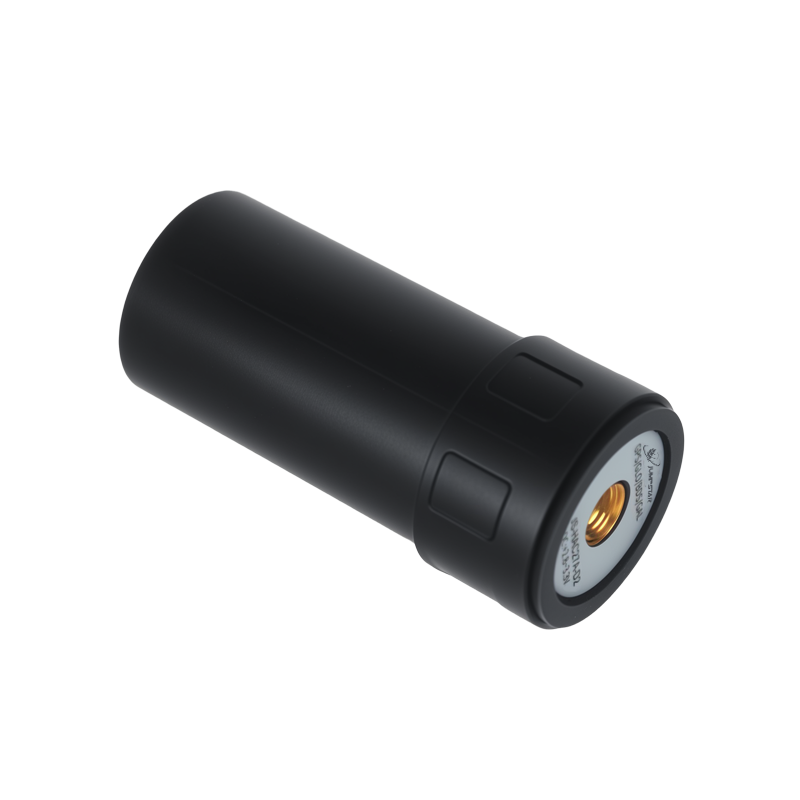
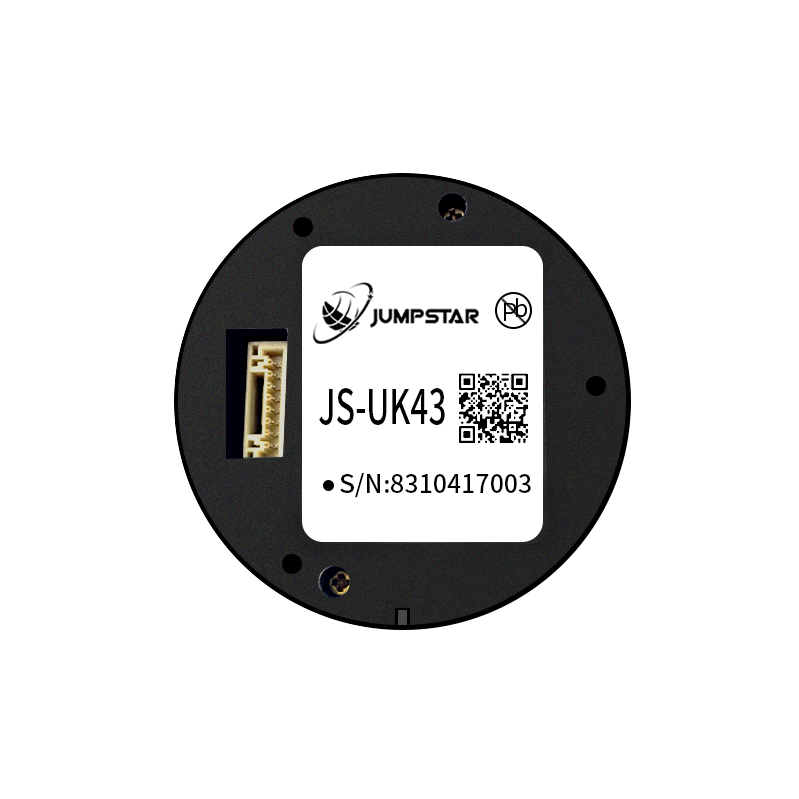
- Smart antennas such as the JS-UK43, JS-NK43-2 and JS-CK43-2 place the receiver inside the antenna housing. The physical boundary of "the product" moves, and with it the question of which item carries the approval and which item is merely a part.
- Sensor-fusion modules such as the JS-RP26-U combine GNSS with inertial sensing and specify dead-reckoning behaviour when satellite signals are lost. That adds motion and installation conditions to a file that would otherwise be purely RF and electrical.
The same module also travels between host categories. An RTK GNSS module inside an agricultural steering controller, a surveying base station and a drone airframe faces three different installation environments and potentially three different approval paths. That is why mapping at the category level is more durable than repeating a single product claim.

Mapping requirement families to the six product categories
The table below maps each category to the requirement families that most often apply and to the document a buyer should expect to review. It describes categories of evidence, not approvals held by any particular model.
| Product category | What triggers the review | Evidence normally requested |
|---|---|---|
| GNSS RTK Receiver | Complete enclosure with RF input, power conversion, data interfaces and often a cellular modem | Model-level declaration, EMC and radio report where applicable, environmental test summary, label artwork, power-supply specification |
| RTK Board | Bare board sold for integration; the host enclosure defines much of the RF environment | Board-level test data, integration guidance, pin and interface documentation, statement of who holds market approval |
| GPS GNSS Module | Component-level device, frequently with an integrated passive antenna | Per-model substance declaration, electrical limits, storage and handling conditions, revision control |
| RTK GNSS Module | Multi-band component with higher power draw and, in some variants, an integrated antenna | Substance declaration, thermal limits, interface and protocol list, firmware revision identification |
| GNSS Antenna | Passive or active radiating element with LNA and cable assembly | RF characteristics, gain and noise figure, connector and mounting specification, ingress rating conditions |
| Smart Antenna | Receiver and antenna combined in one housing | Full product file covering both RF and digital behaviour, plus environmental evidence for the housing |
Two structural points follow from this mapping. First, the further a product sits from a finished enclosure, the more the approval responsibility shifts toward the integrator — a board and a module are usually approved as part of something else. Second, when a supplier states that a module is approved at component level, the documentation must name the exact model and variant, because approval of a family does not automatically extend to a different band configuration or connector option.
How to read a regional requirement in five steps
Regional requirements differ in detail but are read in a consistent order. Working through these five steps before requesting documents prevents most of the back-and-forth that delays a first shipment.
Step 1 — Classify the item by its RF behaviour
Decide whether the item only receives, or also transmits. A pure GNSS receiver is one review object; a receiver with an integrated cellular modem is another, because the modem brings its own approval regime. The UAV application profile in the supplied material, for example, describes a built-in 4G module used for NTRIP correction data — a company-reported configuration feature that changes the approval scope of the finished airframe.
Step 2 — Fix the destination market and the installation context
The same product line can be sold into several economies, and the applicable requirements follow the market of sale and the place of installation. A vehicle-mounted terminal, a fixed base station and an airborne unit are installed under different conditions, so the evidence pack should be assembled per market and per host category rather than per catalogue page.
Step 3 — Separate mandatory market access from buyer specification
Ask which items on your list are legal prerequisites for placing the product on the market, and which are your own engineering requirements. Temperature range, ingress protection and vibration tolerance usually fall in the second group. Conflating the two inflates the document request and obscures the items that genuinely block shipment.
Step 4 — Assign ownership in writing
Name the party responsible for each trail: module supplier, host manufacturer, importer or distributor. Put it in the purchase contract or technical agreement. This single step resolves most disputes that surface during customs clearance or a customer audit.
Step 5 — Date and version the evidence
Record the certificate expiry date, the test report revision, and the hardware and firmware revision the evidence refers to. Evidence without a version is not evidence — a report on an earlier board revision does not describe the unit in the box.
Reading a supplier certificate properly: the ISO 9001 example
A quality management certificate is the most commonly supplied document in this industry and the most commonly misread. The documented certificate in the material reviewed here is ISO 9001:2015, certificate number UQ231801R2, issued by Beijing United Intelligence Certification Co., Ltd., issued on 11 December 2023 and expiring on 10 December 2026, with a stated scope of "R&D and sales of GPS module".
Six checks turn that paragraph into an audit:
- Holder identity. The legal name on the certificate must match the entity that signs your contract and issues the invoice. Trading names, brand names and website domains are not the same thing as a legal entity.
- Standard and version. ISO 9001:2015 is not interchangeable with an earlier revision, and the revision number should appear explicitly.
- Scope wording. This is where most reviews stop too early. A scope covering research, development and sales of GPS modules does not by itself describe production of RTK GNSS modules, antennas or finished receivers. If your purchase falls outside the written scope, ask which certificate covers it.
- Issue and expiry dates. A certificate close to expiry is still valid, but for a multi-year supply agreement you should request the renewed certificate or a surveillance-audit confirmation before committing. The certificate above expires on 10 December 2026, so a renewal record is a reasonable request for any 2027 delivery schedule.
- Issuing body. Record who issued it and whether that body is accredited for the standard in question. The issuing body's public registry is the verification source — a scanned PDF alone is not verification.
- Market field. Certificates sometimes list served markets. That field describes commercial coverage. It is not a market-access approval for any product.
Read against those six checks, a single certificate tells you something useful and something limited: the management system has been independently assessed, and the assessed scope must still be matched against what you are actually buying.
Environmental and mechanical evidence: where the footnotes matter
Environmental specifications are the part of a datasheet most often copied into a requirement document without its conditions. Three examples from the reviewed specifications show why the conditions travel with the number.
The JS-ATP36-M GPS GNSS module is specified for operation from -40 °C to +85 °C, but the same specification states that the farad capacitor is limited to -25 °C to +60 °C and that hot start is unavailable outside that range. The headline figure describes survival and operation; it does not describe every function across the full span. A buyer who needs guaranteed hot start at -30 °C needs that stated explicitly, not inferred.
The JS-HAC27A-D2 helical antenna carries an IP65 rating qualified as "with mated SMA connector". Ingress protection in that case is a property of the assembled joint, not of the antenna body alone — so the rating depends on the mating connector and the installation practice, both of which sit with the integrator.
Ranges also differ by product family rather than by brand. Modules in the reviewed set are commonly specified from -40 °C to +85 °C with 95% relative humidity, the P-Box-AP55 receiver adds a storage range of -55 °C to +85 °C, the JS-X168 anti-jamming antenna is specified from -40 °C to +70 °C, and the JS-HAC27A-D2 antenna from -30 °C to +70 °C. None of these figures is a certification. What the reviewed material does not contain is an independent ingress, vibration or thermal test report, so for a deployment where those conditions matter, the report — not the datasheet line — should be the deliverable.
A documentation checklist for global industrial deployments
Use this list as a request template before qualification, and score each item as received, promised with a date, or not applicable with a stated reason.
- Legal entity match. Certificate holder, contracting entity and invoice issuer are the same legal name and address.
- Scope coverage. The certificate scope covers the activity you are buying (design, manufacture, sales) and the product category involved.
- Validity window. Expiry date is later than your last planned shipment, or a renewal record is provided.
- Model-level declaration. Any conformity declaration names the exact model and variant, including band configuration and connector option.
- Substance declaration per model. RoHS-type or equivalent declaration issued for the specific part number, not for the catalogue as a whole.
- Radio and EMC report identity. Report cites the standard applied, the accredited laboratory, the sample revision tested and the date.
- Approval ownership statement. A written statement of whether market approval sits with the component supplier or the host manufacturer.
- Environmental test conditions. Temperature, humidity, ingress and vibration evidence with the test conditions and the qualification level stated.
- Label and marking file. Label artwork, model designation, traceability or batch code, and the location where each mark is applied.
- Document control. Revision number and date on every document, plus a commitment to notify you when a document or a qualified configuration changes.

What changes by deployment
Compliance effort should be allocated where the deployment actually generates risk. The same product family produces a very different evidence request depending on where it is installed.
UAV and aerial surveying
The supplied UAV application profile describes airborne operation from -40 °C to +85 °C, storage from -45 °C to +85 °C, humidity ≤95% non-condensing, flight altitude up to 18,000 m, acceleration ≤4 g and speed up to 515 m/s, powered from a 4.5-12 V DC battery. For this class, thermal cycling, vibration and altitude conditions usually drive the evidence request, and an integrated cellular module for NTRIP corrections adds a separate approval scope. The anti-jamming and anti-spoofing features described in the profile are company-reported capabilities, not regulatory approvals.
Fleet, vehicle and autonomous platforms
The fleet-management application profile describes fixed mounting inside vehicles, a 4.5-12 V DC supply, operating temperature from -40 °C to +85 °C, storage from -55 °C to +85 °C, 4 g acceleration, speeds up to 515 m/s and long-term exposure to engine and road vibration. Because the unit is installed in a vehicle, the finished vehicle's own approval and EMC position is part of the chain, and the terminal supplier's documents should be written so the vehicle integrator can use them.
Surveying and fixed base stations
A static base station with local data logging and unattended operation shifts the emphasis from vibration toward temperature cycling, enclosure protection and power stability. Ask for the storage range and the logging behaviour separately from the operating range, since base stations often sit outdoors between campaigns.
Precision agriculture, robotics and marine
Agricultural and robotics installations combine dust, vibration and wide temperature swings, so ingress and shock evidence matters more than headline accuracy. Marine navigation appears in the stated application coverage of products such as the JS-NK43-2, JS-CK43-2 and JS-UK43, but the reviewed parameter sets do not contain salt-spray or marine-grade ingress evidence; if that is your environment, request it explicitly rather than reading the application list as qualification.
Product-level evidence at a glance
The table records only what the reviewed parameter sets state. "Not stated" means the document set reviewed for this article does not contain a product-level conformity statement for that model — it does not mean the product lacks one.
| Model | Category | Conformity evidence stated | Operating temperature | Note |
|---|---|---|---|---|
| JS-ANK45-2 | RTK GNSS Module | RoHS listed | -40 to +85 °C | 1,408 channels; 45.0 × 45.0 × 12.7 mm |
| JS-ATP36-M | GPS GNSS Module | RoHS compliant | -40 to +85 °C | Hot start unavailable outside -25 to +60 °C (farad capacitor limit) |
| JS-AP26-H | GPS GNSS Module | RoHS compliant | -40 to +85 °C | 16.0 × 12.2 × 2.4 mm; 95% humidity |
| JS-RP26-U | GNSS module with IMU | RoHS compliant | -40 to +85 °C | Company-specified dead-reckoning error ≤5% within 120 s of signal loss |
| JS-CK43-2 | Smart Antenna | RoHS compliant | -40 to +85 °C | Company-specified RTK 0.8 cm + 1 ppm horizontal (RMS) |
| P-Box-AP55 | GNSS RTK Receiver | Not stated | -40 to +85 °C | Storage -55 to +85 °C; 448 channels |
| JS-UK43 | Smart Antenna | Not stated | Not stated | Company-specified RTK 2 cm + 1 ppm horizontal |
| JS-HAC27A-D2 | GNSS Antenna | Not stated | -30 to +70 °C | IP65 only with mated SMA connector |
| JS-X168 | Anti-jamming GNSS Antenna | Not stated | -40 to +70 °C | Company-specified 115 dB single-source / 95 dB three-source suppression |
Two patterns are worth noting for procurement. First, substance conformity is documented unevenly across a portfolio even within a single supplier, so a per-model request is normal rather than accusatory. Second, a company-level ISO 9001 certificate does not fill the gap left by a missing per-model statement — the two documents answer different questions.
FAQ
CE-certified high-precision GNSS solutions manufacturer: how do I verify one?
A CE-type claim is model-specific and holder-specific, so verification starts with three documents: a declaration naming the exact model and variant plus the legal manufacturer, a test report from an accredited laboratory citing the standard applied, and confirmation of who holds the technical file. Ask also whether the approval covers the module as supplied or only the host equipment it is built into. In the documentation reviewed for this article, no CE approval is confirmed for any receiver, module or antenna in the portfolio; the confirmed conformity evidence is ISO 9001:2015 certificate UQ231801R2 and RoHS statements on specific datasheets. A catalogue-level certification badge without a model-level declaration should be treated as unverified.
What documents should I request before approving an RTK receiver for a new market?
Request, in one pack: the legal entity and certificate scope for the quality system; a per-model substance declaration; the radio and EMC report identifying standard, laboratory, sample revision and date; a written statement of whether market approval sits with the supplier or the host integrator; environmental evidence with test conditions for temperature, humidity, ingress and vibration; and the label and marking file showing model designation and traceability code. Requesting them together, before samples ship, usually reveals gaps earlier than a first-article inspection.
Is ISO 9001 certification the same as product compliance?
No. ISO 9001 assesses how a company manages its processes. Product compliance assesses whether a specific item meets a specific requirement. The difference becomes concrete when you read the scope: the documented certificate here covers "R&D and sales of GPS module", so it evidences the management system for that activity, not radio or EMC conformity for an RTK receiver, an antenna or an RTK GNSS module. Both documents are useful, and neither substitutes for the other.
How does compliance work affect cost and schedule?
The reviewed commercial parameters are a minimum order quantity of 500 units and a 30-day lead time, with 100% testing and remote after-sales support. Those figures describe production, not third-party testing, and the reviewed material contains no compliance-test turnaround data — so confirm testing timelines separately and in writing. Cost is driven mainly by how many markets you enter and how many reports you need, which is why consolidating a single model and variant across markets before adding variants is usually cheaper than qualifying several configurations in parallel.
Can I evaluate samples before committing to a compliance-driven order?
The documented capability data specifies OEM/ODM customization across modules, PCBA, antennas, functions, ports, interfaces and logo, with a 500-unit minimum and a 30-day lead time; sample terms themselves are not stated in that data, so ask for them explicitly together with the document pack for the exact model. The most efficient sequence is to define the model, variant and destination market first, then request the sample and the corresponding documents at the same time, so that what you test and what you file describe the same configuration. You can start that conversation through Jumpstar or review the Jumpstar company profile 2026 for the current product families.
Conclusion
Compliance for high-precision GNSS hardware is an exercise in document discipline, not in badge collecting. Separate the quality management certificate from the product substance declaration, separate both from radio and EMC market access, and keep environmental and mechanical qualification in the buyer's own requirement document where it belongs. Map each of those trails to the specific category you are buying — receiver, board, GPS GNSS module, RTK GNSS module, antenna or smart antenna — and then check the details that decide audits: exact model and variant, written scope, expiry date, test conditions, and who holds the approval.
The honest position for most sourcing projects is that some evidence exists and some does not. In the material reviewed here, ISO 9001:2015 certificate UQ231801R2 and several per-model RoHS statements are documented, while regional radio approvals and independent environmental reports are not. Treating that distinction as normal procurement information rather than as a pass-or-fail verdict is what allows a global deployment to move — and it gives you a defensible file the day a customer, a customs officer or a notified body asks the question.
Have Questions or Need More Details?
Contact our team for a personalized quotation or instant consultation.
Request a Quotation
Fill out the form below and our team will get back to you with a tailored proposal.
WhatsApp Direct Chat
Prefer to chat in real-time? Message us on WhatsApp for instant assistance & quick answers.
- Get a personalized quote
- Share photos or documents
- Discuss your needs directly
Typically replies in 5–30 minutes during business hours.