
Ranked: 6 High Precision GNSS Building Blocks for a Centimeter-Level RTK Stack
A centimeter-level RTK stack is a chain of six hardware layers, not a single purchase. The GNSS RTK Receiver, Smart Antenna, RTK GNSS Module, RTK Board, GNSS Antenna and GPS GNSS Module each solve a different part of the same problem. This article ranks them by how directly each layer produces RTK-ready positioning, how much integration work it demands, and how well it fits UAV, precision agriculture and autonomous-system deployments.

Problem Definition: Why the Entry Layer Decides the Project
Most high-precision GNSS integration problems start with the wrong entry point. A team buys a GPS GNSS module expecting centimeter-level output, then discovers it delivers metre-level positioning. Another team builds a custom carrier around an RTK board before the antenna placement and RF grounding are settled. A third team selects a smart antenna but has no host processor plan for heading data.
The six building blocks ranked below are not interchangeable. Each has a distinct role in the signal chain:
- GNSS RTK Receiver — a turnkey unit that combines the RTK engine, antenna, power and communications.
- Smart Antenna — an integrated antenna, RTK receiver and, in some designs, dual-antenna heading in one housing.
- RTK GNSS Module — an RTK engine in a compact module, with an integrated antenna or an external antenna option.
- RTK Board — an RTK engine on a board intended for custom carrier integration.
- GNSS Antenna — the antenna layer that converts satellite signals into usable RF input.
- GPS GNSS Module — a standard-precision positioning module for general location, tracking and fallback.
The ranking order is an editorial judgment built on four criteria: RTK readiness, integration effort, antenna pairing flexibility, and fit with UAV, agriculture and autonomous platforms. It is not a laboratory performance ranking. Manufacturer-stated accuracy figures appear throughout because they are the verified product facts available; they should still be validated under the buyer's own test conditions.
Industry Background: From Surveying to Autonomous Systems
High-precision GNSS has moved well beyond surveying and mapping. UAVs need stable centimeter-level position for aerial surveying and flight control. Precision agriculture relies on RTK for auto-steering and section control. Autonomous vehicles, mobile robots, port equipment and rail inspection platforms use RTK plus heading to stay on a defined path. Fleet management and marine navigation increasingly mix standard GNSS with high-precision corrections where the application justifies the cost.
The technical direction is consistent: multi-constellation, multi-band tracking; RTK and PPP correction support; dual-antenna heading; interference mitigation; and industrial-grade environmental ratings. Buyers increasingly want modular building blocks that can be combined into a system rather than a single locked unit.
Shenzhen Jumpstar Technology Co., Ltd. (JUMPSTAR) is a Shenzhen-based GNSS hardware manufacturer founded in 2013. The company operates a 5,000 m² facility with 200 employees and 20 engineers, and reports that 70% of its output is exported to the EU, USA and Middle East. Its product range includes RTK modules, GNSS antennas, GNSS receivers, smart antennas, anti-jamming GPS antennas, choke ring antennas, helical antennas and timing modules. This portfolio is relevant to the ranking below because it allows a buyer to assemble several layers of the same stack from one source — but the ranking itself is based on system role, not on brand preference.
Detailed Solution: The Six Building Blocks, Ranked
GNSS RTK Receiver — The Turnkey Layer
What it is: A complete RTK receiver unit that includes the GNSS engine, antenna, power regulation, communications and enclosure. The buyer mounts it, powers it and configures it.
Why it ranks first: This is the shortest path to RTK-ready positioning. No RF layout, no antenna matching, no carrier design. The integration work moves to installation, power, data protocol and field configuration.
Verified examples: The JS-X11 is an all-in-one RTK smart antenna and base station. It tracks GPS L1/L1C/L2C/L2P/L5; BDS-2/3 B1I, B3I, B1C, B2a and B2b; GLONASS G1/G2/G3; Galileo E1/E5a/E5b/E6; and QZSS/SBAS/IRNSS full bands. Its stated RTK accuracy is 2 cm ± 1 ppm, with PPP at ≤50 cm static. It supports 4G Cat.1, BLE 5.2, optional radio and Wi-Fi, a 9–45 V DC input, a 5200 mAh backup battery, IP66 protection and NMEA 0183 plus RTCM 3.3/3.2/3.1/3.0 protocols. The G27SH-AH is an all-constellation all-frequency receiver with 789 hardware channels, stated RTK horizontal accuracy of 0.6 cm + 0.5 ppm, heading accuracy of 0.15° at a 1 m baseline and 0.03° at a 5 m baseline, IP67 protection, CAN, dual UART, PPS and an RF TNC interface.
Where it fits: UAV ground stations, precision agriculture machinery, autonomous vehicles, marine positioning and fleet monitoring where a complete unit can be mounted directly.
Limits: A turnkey receiver is larger and heavier than a module. The JS-X11 measures 122 × 122 × 43.09 mm and weighs 375 g, with an operating range of -20°C to +75°C. For a small UAV or a wide-temperature industrial enclosure, that may be too much mass or too narrow a thermal window. The G27SH-AH covers -40°C to +85°C but is still a mounted receiver rather than a chip-down design.
Smart Antenna — Integrated Antenna, Receiver and Heading
What it is: A smart antenna integrates the GNSS antenna, RTK receiver and — in dual-antenna designs — heading output in one housing. It removes the RF cable between antenna and receiver, which is one of the most common sources of integration error.
Why it ranks second: It delivers RTK positioning with almost the same directness as a turnkey receiver, but it still needs a host board, UART wiring and configuration. It is the best compromise when a full receiver is too bulky but a bare module is too exposed.
Verified example: The JS-NK43-2 is a multi-system, multi-frequency RTK positioning and dual-antenna heading module with an integrated high-gain helical active antenna. It tracks BDS B1I/B2I/B3I; GPS L1C/A/L1C/L2P(Y)/L5; GLONASS L1/L2; Galileo E1/E5a/E5b; QZSS L1/L2/L5; and SBAS. It provides 1,408 super channels, a stated RTK horizontal accuracy of 1.5 cm + 1 ppm and vertical accuracy of 2.0 cm + 1 ppm, a cold start under 30 s, RTK initialization under 5 s typical, a 20 Hz maximum update rate, 3.3–5.5 V input, 180–310 mA at 3.3 V and an 8-pin interface with UART, I2C and PPS.
Where it fits: UAV navigation, surveying and mapping equipment, intelligent robots, automated lawn mowers, precision agriculture and handheld high-precision terminals.
Limits: The antenna is fixed inside the housing, so the mechanical envelope and antenna placement are set by the product. The JS-NK43-2 measures 48.0 × 43.2 × 37.0 mm. If the application needs a remotely mounted antenna or a very specific radiation pattern, a separate antenna layer gives more freedom.
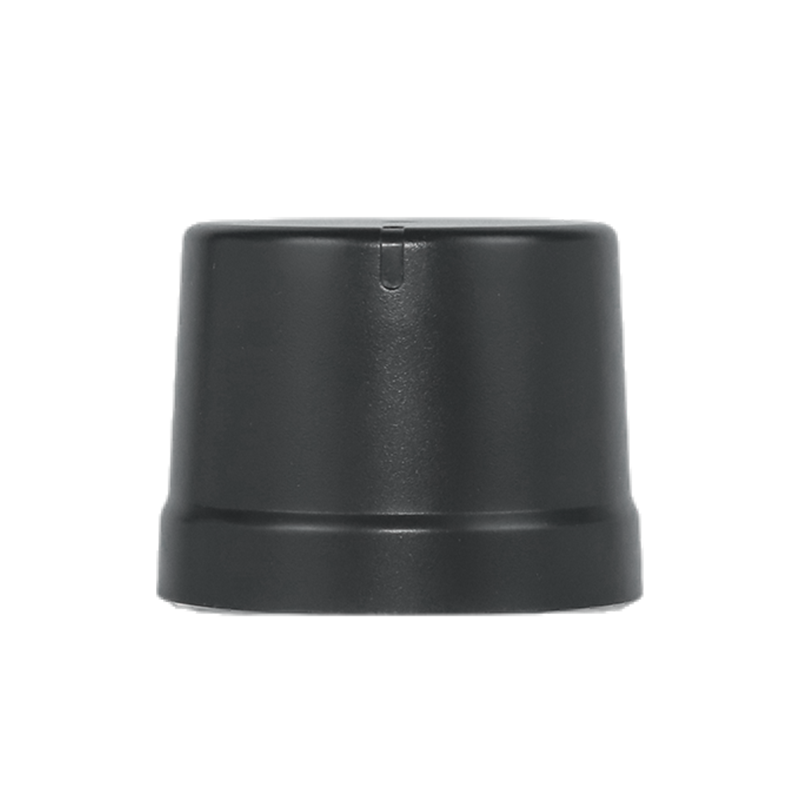
RTK GNSS Module — The Integrator’s RTK Engine
What it is: A compact module that contains the RTK GNSS engine and, depending on the model, an integrated antenna or an external antenna connection. It is soldered or connector-mounted onto the customer’s board.
Why it ranks third: It still delivers RTK output directly, but it shifts RF layout, power decoupling, grounding, thermal design and antenna placement onto the integrator. That is more work than a smart antenna, but less than a bare RTK board.
Verified examples: The JS-SK40 is a multi-system, multi-frequency high-precision RTK GNSS helical antenna module with 789 hardware channels. Its stated RTK accuracy is horizontal 0.6 cm + 0.5 ppm and vertical 1 cm + 1 ppm. It uses a dual-antenna configuration: a built-in active antenna plus an external MMCX antenna option, with 3.0–5.5 V antenna bias, 15–35 dB gain, 4.8–5.5 V input, 20 Hz maximum update rate and dual UART plus I2C and PPS interfaces. It measures 39.80 × 35.00 × 32.41 mm and weighs under 10.2 g. The JS-ANK45-2 is a multi-system, multi-frequency RTK module with 1,408 super channels, stated RTK horizontal accuracy of 1.5 cm + 1 ppm and vertical accuracy of 2.0 cm + 1 ppm, a cold start under 30 s, RTK initialization under 5 s typical, 20 Hz update rate, 3.0–5.5 V input, 45.0 × 45.0 × 12.7 mm dimensions and an integrated passive high-gain antenna.
Where it fits: UAV flight controllers, precision agriculture terminals, robotic navigation boards, surveying equipment and autonomous platforms where size and weight matter.
Limits: The module does not remove the need for good antenna engineering. Ground plane size, cable loss, connector quality and enclosure material all affect RTK performance. The JS-SK40’s external MMCX option adds flexibility but also adds an RF path that must be designed and tested.
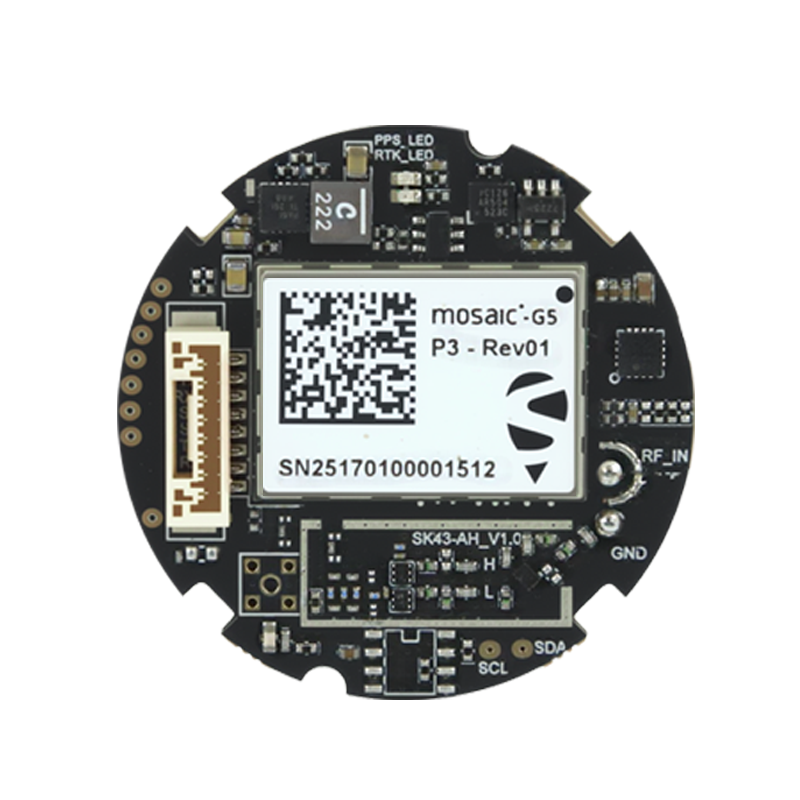
RTK Board — Maximum Flexibility, Maximum Integration Work
What it is: An RTK board is the RTK engine presented on a carrier-ready PCB. It is intended for OEMs and integrators who need to design their own carrier board, connector set, enclosure and power architecture.
Why it ranks fourth: The board gives the greatest control over interfaces, mechanical form and environmental design, but it also requires the most engineering. The buyer must design the RF front end, antenna interface, power sequencing, thermal path and firmware integration. In a directness ranking, that places it below the module and smart antenna.
Verified description: Jumpstar’s published product materials describe RTK boards with centimeter-level positioning, dual-frequency RTK and dual-antenna heading functionality. Model-level selection is project-specific and should be confirmed with the supplier against the target interface, power and environmental requirements.
Where it fits: OEM brand owners, industrial equipment builders, custom autonomous platforms and projects that need a proprietary enclosure or a non-standard connector layout.
Limits: The board is not a finished product. It needs a carrier design, antenna selection, EMC-conscious layout and a validation plan. Teams without RF engineering capacity should start at Rank 1, 2 or 3 instead.
GNSS Antenna — The Performance Multiplier
What it is: The antenna converts incoming satellite signals into RF energy for the receiver. It does not compute a position, but it sets the practical ceiling for RTK accuracy, multipath rejection and signal stability.
Why it ranks fifth: An antenna is essential to every RTK stack, but it is an enabling layer rather than a positioning engine. Its ranking reflects that supporting role. A good antenna cannot turn a standard GPS module into an RTK receiver, but a poor antenna can degrade a good RTK receiver.
Verified examples: The JS-HAC42A-F is a helical GNSS active antenna covering GPS L1/L2/L5; BDS B1I/B1C/B2(I/Q)/B2b/B2a; GLONASS G1; and Galileo E1/E5/E5a/E5b. It has 50 Ω impedance, right-hand circular polarization, 360° horizontal coverage, VSWR ≤2.0, noise figure ≤2 dB, LNA gain of 37 ± 3 dB, a diameter of 44.8 mm and height of 42 mm, 27.3 g weight, SMA male connector and IP65 protection with a mated SMA connector. The JS-HAC18A-F is a smaller helical antenna covering GPS L1/L2/L5, BDS B1/B2, GLONASS G1/G3, Galileo E1/E5a/E5b, QZSS L1/L2/L5, SBAS L1/L5 and IRNSS L5, with axial ratio ≤3 dB, LNA gain of 33 ± 2 dB, 2.8–3.3 V operating voltage, ≤30 mA current, 18 mm diameter, 50.8 mm height and 10.8 g weight.
Where it fits: Every RTK deployment. The choice between a larger helical antenna and a compact antenna depends on platform space, cable route, ground plane and required gain.
Limits: Antenna gain, voltage and connector must match the receiver or module. Mounting location matters as much as the datasheet: a high-gain antenna placed under a battery or next to a motor driver will not deliver its rated performance.
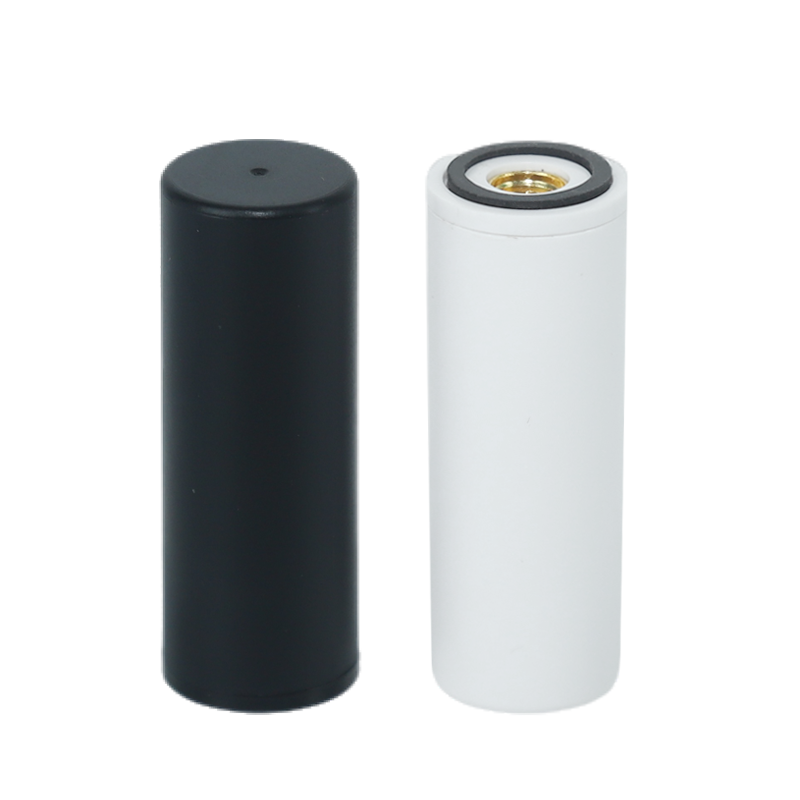
GPS GNSS Module — The Foundation Layer
What it is: A standard-precision GNSS module that provides position, velocity and time from multiple constellations. It is not an RTK engine and does not deliver centimeter-level positioning on its own.
Why it ranks sixth: It is the least direct route to a centimeter-level RTK stack. Its value is in coarse positioning, fast time-to-first-fix, low power and small size — functions that support a system but do not replace the RTK layer.
Verified examples: The JS-ARP30-2 is a multi-constellation dual-band GNSS positioning module covering GPS L1/L5; BDS B1I/B1C/B2a/B2B/B2I; GLONASS G1; Galileo E1/E5; QZSS L1/L5; and NavIC. It provides 200 tracking channels, stated horizontal accuracy of 1.0 m and vertical accuracy of 2.5 m under open-sky, 24-hour static conditions with more than six satellites, a cold start of 28 s, AGNSS fix in 2 s, hot start in 1 s, a 10 Hz maximum update rate and a 30.0 × 30.0 × 12.5 mm package. The JS-AP08-PR is a mini single-frequency dual-mode module covering GPS/QZSS L1C/A and BDS B1I/B1C, with 88 tracking channels, stated GNSS accuracy of 2.5 m, 1PPS accuracy of 20 ns, a cold start of 29 s, hot start of 1 s, a maximum 5 Hz update rate and an 8.0 × 6.0 × 2.3 mm package weighing under 1 g.
Where it fits: Asset tracking, wearable devices, fleet telematics, vehicle navigation, portable positioning terminals and personnel safety devices. In an RTK system, it can serve as a backup position source or a coarse-alignment input, but it should not be specified as the primary centimeter-level engine.
Limits: Metre-level accuracy is not a substitute for RTK. If the project requires lane-level or centimeter-level positioning, the GPS GNSS module belongs in a supporting role.

Step-by-Step Breakdown: Assembling the Stack
The ranking becomes useful only when it is turned into a build sequence. The following steps keep the integration logic in the right order.
- Define the positioning requirement. Decide whether the project needs RTK, PPP, heading, or standard positioning. A UAV aerial survey may need centimeter-level position and heading; a fleet tracker may need only metre-level location.
- Choose the highest directness layer that fits the platform. If space and power allow, start with a GNSS RTK Receiver. If the platform is weight-sensitive, move to a Smart Antenna or RTK GNSS Module. If the product needs a proprietary carrier, evaluate an RTK Board.
- Pair the antenna deliberately. Match antenna gain, voltage and connector to the receiver or module. Confirm the ground plane, cable length and mounting location before freezing the mechanical design.
- Design power, data and timing interfaces. Confirm the input voltage range, current budget, UART/CAN/USB interfaces, PPS availability and protocol support. The JS-X11 supports NMEA 0183, RTCM 3.3/3.2/3.1/3.0 and JT/T808-2013; the JS-SK40 supports NMEA 0183, SBF and RTCM3.X with MSM; the G27SH-AH provides CAN, dual UART and PPS.
- Plan correction data. RTK requires a correction source. The receiver or module must be able to receive RTCM correction data over the chosen link, whether that is a 4G module, a radio, or a local base station.
- Validate in the real environment. Test static repeatability, dynamic tracking, multipath conditions and temperature behaviour. Manufacturer accuracy figures are a starting point, not a substitute for field validation.
- Lock the supply chain. Confirm OEM/ODM scope, customization options, MOQ, lead time and test coverage before volume release.
Use Cases: Which Layer Leads in Each Deployment
UAV Surveying and Mapping
Aerial survey platforms need low weight, fast RTK initialization and reliable heading. A Smart Antenna or RTK GNSS Module is usually the leading layer because it integrates the antenna and reduces payload mass. The JS-SK40, at under 10.2 g, and the JS-NK43-2, with integrated dual-antenna heading, both fit this profile. A turnkey receiver remains useful for the ground base station.
Precision Agriculture
Auto-steering and implement control require stable RTK position on a moving machine, often with CAN or serial interfaces and a wide temperature range. A GNSS RTK Receiver such as the G27SH-AH, with -40°C to +85°C operation, IP67 protection and CAN, is a natural fit. An RTK GNSS Module with an external antenna is an alternative for a custom terminal.
Autonomous Vehicles and Mobile Robots
Lane keeping and path following need position plus heading. A dual-antenna smart antenna or a heading-capable RTK receiver is the most direct layer. The G27SH-AH provides heading accuracy of 0.03° at a 5 m baseline; the JS-NK43-2 provides a dual-antenna heading architecture in a compact housing. An RTK Board is appropriate when the vehicle controller and enclosure are proprietary.
Surveying and Mapping
Survey work values repeatability, protocol compatibility and antenna quality. A turnkey RTK receiver or smart antenna reduces setup time, while a separate high-gain antenna can improve performance in difficult sky view conditions. The JS-HAC42A-F and JS-HAC18A-F cover the antenna layer for different mechanical envelopes.
Fleet Management and Marine Navigation
Fleet telematics often starts with standard positioning and upgrades selectively. A GPS GNSS Module such as the JS-ARP30-2 or JS-AP08-PR can serve the tracking function, while a higher-precision receiver is reserved for vehicles or vessels that need lane-level or docking-level accuracy.
Comparison Table: Six Building Blocks at a Glance
| Rank | Building block | RTK delivery | Integration effort | Antenna pairing | Typical deployments | Verified examples |
|---|---|---|---|---|---|---|
| 1 | GNSS RTK Receiver | Complete RTK engine with antenna, power and communications | Lowest — mount, power and configure | Integrated or external, depending on model | UAV ground stations, agriculture, autonomous vehicles, marine, fleet | JS-X11; G27SH-AH |
| 2 | Smart Antenna | RTK engine with integrated antenna and optional dual-antenna heading | Low to medium — host board, UART and configuration | Integrated helical antenna | UAVs, robotics, surveying, automated mowers, handheld terminals | JS-NK43-2 |
| 3 | RTK GNSS Module | RTK engine in a compact module, with integrated or external antenna option | Medium — PCB, power, RF and thermal design | Built-in antenna plus MMCX option, or integrated passive antenna | UAV flight controllers, agriculture terminals, robotics, surveying | JS-SK40; JS-ANK45-2 |
| 4 | RTK Board | RTK engine on a carrier-ready board | High — RF front end, power, enclosure and firmware | External, designed by the integrator | OEM brands, industrial equipment, custom autonomous platforms | Project-specific board configuration |
| 5 | GNSS Antenna | No positioning engine; enables the RTK signal path | Low to add, high to integrate well | It is the antenna layer | Every RTK deployment | JS-HAC42A-F; JS-HAC18A-F |
| 6 | GPS GNSS Module | Standard positioning, not centimeter-level RTK | Low to medium | Passive or active antenna, depending on model | Asset tracking, wearables, fleet telematics, portable devices | JS-ARP30-2; JS-AP08-PR |
Reading the table from top to bottom shows the trade-off clearly: directness decreases as flexibility increases. The highest-ranked layer needs the least engineering; the lowest-ranked layer supports the stack but does not replace the RTK engine. A well-designed system often uses more than one row.
FAQ
1. Which protocol and interface checks should come before integrating these GNSS building blocks?
Start with the data path. The JS-X11 supports NMEA 0183, RTCM 3.3/3.2/3.1/3.0 and JT/T808-2013. The JS-SK40 supports NMEA 0183, SBF and RTCM3.X with MSM. The G27SH-AH provides CAN, dual UART and PPS. Confirm the host interface, correction-data format, antenna bias voltage and connector type before the carrier or harness is designed. Market-access documentation and radio approval requirements should be checked separately for the destination country, because they depend on the final product configuration.
2. Can a module-level RTK layer deliver the same centimeter-level positioning as a turnkey receiver?
Both can output RTK corrections, but the published accuracy figures are not directly comparable because test conditions differ. Jumpstar’s product data lists RTK horizontal accuracy of 0.6 cm + 0.5 ppm for the JS-SK40, 1.5 cm + 1 ppm for the JS-ANK45-2 and JS-NK43-2, and 2 cm ± 1 ppm for the JS-X11. Antenna placement, ground plane, multipath and correction quality affect the result more than the form factor alone. Buyers should validate the chosen layer under their own operating conditions.
3. Which building block has the lowest total cost of integration?
Unit price is only one part of the cost. A turnkey GNSS RTK Receiver reduces engineering hours because the antenna, power and communications are already integrated. A Smart Antenna or RTK GNSS Module lowers hardware volume but adds PCB, RF and thermal design work. An RTK Board gives the most design freedom and the highest integration burden. A GPS GNSS Module is the least expensive path to standard positioning, but it does not deliver centimeter-level RTK. The right comparison is total engineering effort plus unit cost, not unit cost alone.
4. Can I validate samples before committing to mass production?
Sample validation is the correct starting point for any of the six layers. Jumpstar’s published capability data lists OEM/ODM customization for modules, PCBA, antennas, functions, ports, interfaces and logo, with a MOQ of 500 units for volume orders and 100% testing. Sample requests and configuration questions can be discussed directly with the sales team at sales@jgnss.com or through WhatsApp.
5. What lead time applies to OEM/ODM customization?
Jumpstar’s published capability data states a 30-day lead time, a monthly capacity of 50,000 units and 100% test coverage. Those figures apply to the stated customization scope: modules, PCBA, antennas, functions, ports, interfaces and logo. Project-specific requirements such as a new carrier design, a custom antenna or a new enclosure should be confirmed in the quotation. A written RFQ is the fastest way to convert the ranking into a delivery plan.
Next Step: Match the Ranking to Your Build
If the project needs the shortest path to centimeter-level RTK, start with the turnkey receiver. If weight or enclosure space is the constraint, move to the smart antenna or RTK module. If the design is proprietary, evaluate the RTK board with the antenna layer in parallel. Jumpstar supplies RTK receivers, RTK modules, smart antennas and helical GNSS antennas from one Shenzhen manufacturing base, which makes it possible to compare several layers against the same project brief.
Request a sample, a quotation or the product catalogue: sales@jgnss.com · WhatsApp +86 136-2236-7049 · www.jgnss.com
Download the company profile and product overview: Jumpstar company profile 2026 (PDF).

Conclusion: Build the Stack in the Right Order
The six building blocks form a ladder from most direct to most enabling. A GNSS RTK Receiver delivers a complete RTK position with the least integration work. A Smart Antenna comes close while shrinking the mechanical envelope. An RTK GNSS Module gives the integrator an RTK engine with antenna options. An RTK Board offers the most design freedom at the highest engineering cost. A GNSS Antenna determines how well the chosen RTK layer performs in the real environment. A GPS GNSS Module provides the standard-precision foundation for tracking, fallback and supporting functions.
For UAV, precision agriculture and autonomous-system projects, the practical rule is simple: choose the highest-ranked layer that fits the platform’s weight, power and enclosure constraints, then validate the antenna and correction path before locking the design. The ranking is a starting framework, not a substitute for field testing — but it keeps the integration sequence in the right order.
Have Questions or Need More Details?
Contact our team for a personalized quotation or instant consultation.
Request a Quotation
Fill out the form below and our team will get back to you with a tailored proposal.
WhatsApp Direct Chat
Prefer to chat in real-time? Message us on WhatsApp for instant assistance & quick answers.
- Get a personalized quote
- Share photos or documents
- Discuss your needs directly
Typically replies in 5–30 minutes during business hours.