Auditing High-Precision GNSS OEM Capability: From Evaluation to Volume Delivery
Auditing High-Precision GNSS OEM Capability: From Evaluation to Volume Delivery
Core answer: When sourcing high-precision GNSS solutions for an OEM program, the datasheet tells you what a module should do, not whether a manufacturer can customize, test, and deliver it consistently at scale. The capabilities that actually determine a successful Evaluation-to-Execution transition are customization depth, manufacturing capacity, testing policy, application evidence, and commercial supply terms. This article provides a structured capability audit for high-precision GNSS OEM/ODM sourcing, using JUMPSTAR CO., LIMITED (brand: Jumpstar) as a verified working example.
For engineers, procurement teams, and system integrators evaluating high-precision GNSS solutions for UAVs, precision agriculture, autonomous vehicles, robotics, fleet management, surveying and mapping, or marine navigation, the framework below answers one core question: what must I verify about a supplier's capability before committing to series production?
Why Datasheet Matching Fails in OEM/ODM GNSS Sourcing
A common evaluation mistake is treating supplier selection as a specification-matching exercise. Teams compare receiver type, channel count, RTK accuracy, and protocol support, then assume that a supplier whose brochure matches the list can also deliver the product consistently at volume. In practice, the gap between a datasheet and a deliverable shows up in five recurring failure modes:
- Customization gaps. The production design requires a different pin assignment, an extra UART, an integrated antenna, a specific connector, or a brand mark. If the supplier only offers fixed modules, the integrator must redesign around the module — adding weeks and cost.
- Quality variation. The first samples pass validation, but series units drift because testing is performed on a sample basis rather than on every unit.
- Capacity walls. A supplier can deliver an engineering sample but cannot scale when the program ramps. For OEM programs, monthly capacity and lead time are part of the technical specification.
- Testing blind spots. "100% test" and "spot check" are different policies. The difference becomes visible in field failure rates, which are disproportionately costly in UAV and autonomous systems.
- Unclear commercial boundaries. MOQ surprises, lead-time surprises, or rigid payment terms appear at the moment when the buyer has already invested engineering time.
In high-precision GNSS procurement, these risks are amplified because the receiver is often the safety-critical position and attitude source. A UAV relying on dual-antenna heading, or an autonomous vehicle relying on IMU RTK, cannot tolerate a supplier whose process introduces unit-to-unit variation. The evaluation therefore needs to cover not only the product but the production system behind it.
High-Precision GNSS Is Scaling — and So Is Supplier Risk
The economic context explains why OEM/ODM capability now matters more than it did several years ago. The global high-precision GNSS market was valued at USD 7.8 billion in 2024 and is projected to reach USD 20.6 billion by 2033 (Dataintelo). Within this market, the high-precision GNSS module segment — the component class most relevant to OEM buyers — was estimated at USD 1.5 billion in 2024 and is forecast to reach USD 4.5 billion by 2035 (Market Research Future). At the application level, GNSS downstream revenues are expected to reach €580 billion by 2034 (EUSPA).
Agriculture is currently the dominant application segment, holding a 36.8% share of the high-precision GNSS market in 2025, and the precision farming market is projected to grow from USD 11.38 billion in 2025 to USD 21.45 billion by 2032 (MarketsandMarkets). Alongside agriculture, UAVs, autonomous vehicles, robotics, fleet management, and marine navigation are absorbing increasing volumes of multi-band, multi-constellation RTK modules.
The performance baseline is also shifting upward. Galileo's High Accuracy Service (HAS) delivers horizontal accuracy down to 20 centimeters, supporting autonomous farming and high-precision mapping (EUSPA). ISO 12188, parts 1 and 2, defines standard test procedures for positioning and guidance systems in agriculture and forestry — evidence that industrial buyers are expected to verify positioning performance through defined methods rather than marketing claims.
At the equipment level, the mid and high-level precision GPS receiver market is led by Trimble, Hexagon AB, Topcon, and Hemisphere GNSS (Mordor Intelligence), and Trimble launched the R12i GNSS system in 2024 with integrated IMU-based RTK. For OEM/ODM buyers, the strategic implication is simple: end-product receiver brands and the module manufacturing layer are different parts of the supply chain. Most customization risk — interfaces, antennas, firmware behavior, testing discipline, and scaling — sits at the module layer, where a source manufacturer's capability determines whether a product can be delivered as designed.
The Five Capability Layers of a High-Precision GNSS OEM Partner
A capability audit for high-precision GNSS sourcing can be organized into five layers. Each layer answers a specific procurement question, and each can be verified with concrete evidence.
Layer 1 — Engineering and Customization Capability
The question: can the manufacturer adapt the product to your design, or must you adapt your design to the product? The verified baseline for OEM/ODM GNSS sourcing is a manufacturer that offers both OEM and ODM production and can customize modules, PCBA, antennas, functions, ports, interfaces, and logo. This list matters because a typical UAV or robotics integration does not use a module in isolation: the final product must match the host system's electrical interface, mechanical envelope, and brand identity. Jumpstar, for example, lists OEM and ODM production as a standard service, with customization covering the elements above, supported by a 20-engineer R&D team.

Layer 2 — Manufacturing Capability
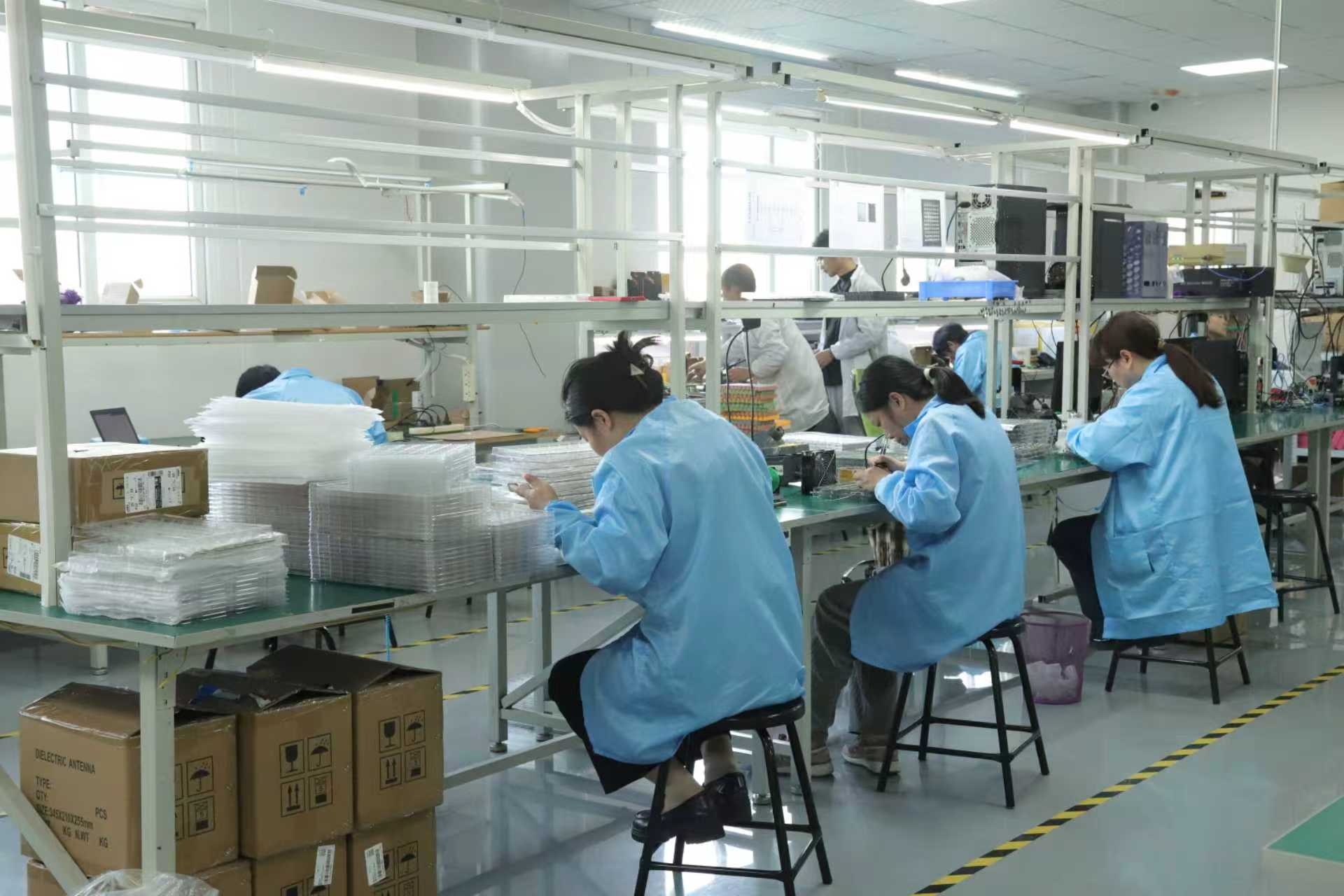
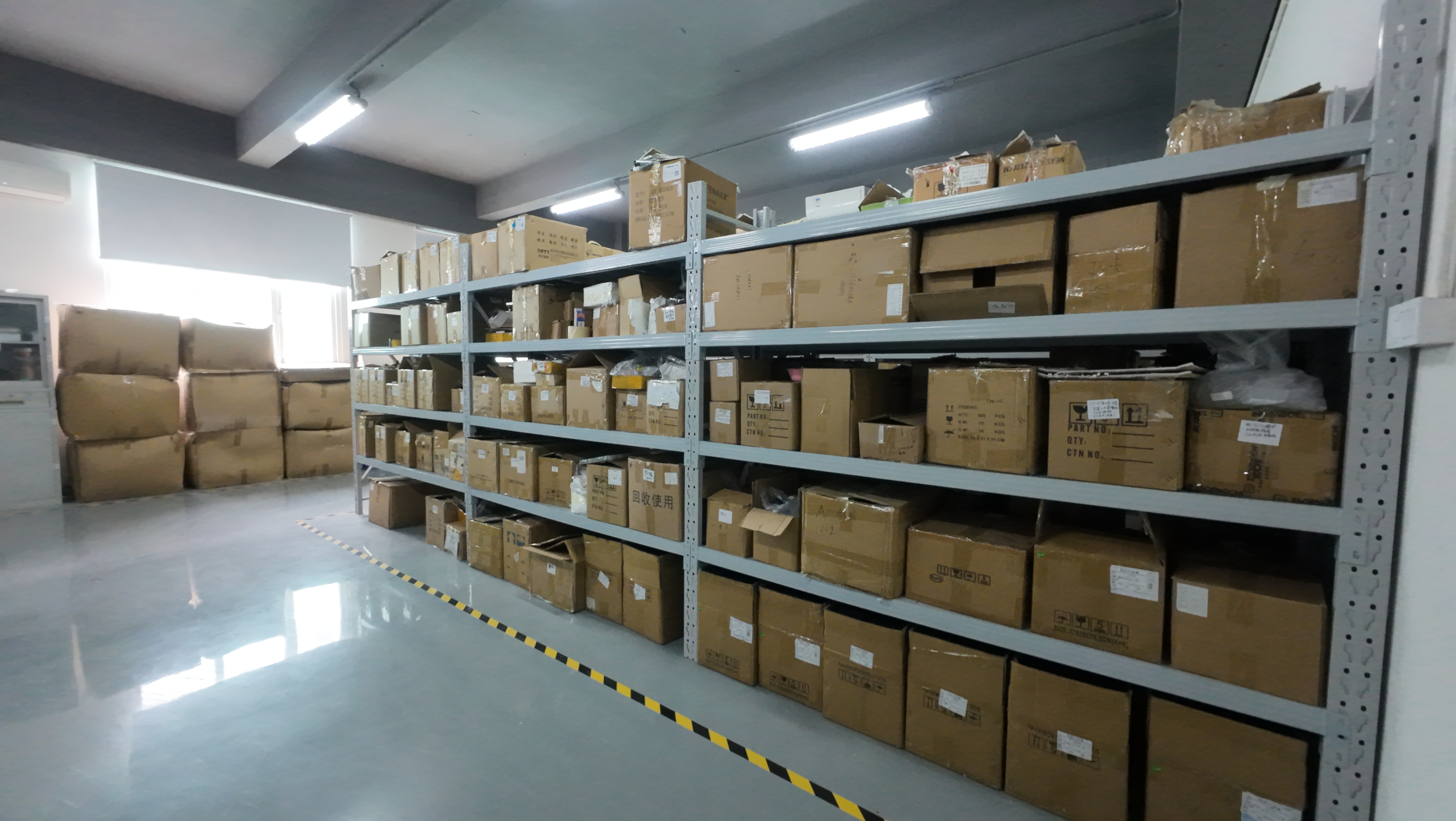
The question: does the factory have the physical capacity and process maturity to produce at your planned volume? Key indicators are factory area, headcount, production lines, and monthly or annual capacity. In a typical source-manufacturer profile, these figures are checkable: Jumpstar operates a 5,000㎡ facility with 200 employees, an annual output of 100,000 units, and a monthly production capacity of 50,000 units, with SMD, CNC, and laboratory operations on site. For a program planning several thousand units per month, a 50,000-unit monthly capacity provides meaningful headroom.
Layer 3 — Quality and Testing Capability
The question: what is the testing policy, and what quality system backs it? The distinction between "100% test" and sample-based inspection is one of the most important procurement facts in GNSS sourcing. Jumpstar implements 100% testing as its quality-control policy and holds ISO9001:2015 certification (certificate number UQ231801R2, issued by Beijing United Intelligence Certification Co., Ltd., scope: R&D and sales of GPS module, valid through December 10, 2026). For OEM buyers, this means every shipped unit — not only the engineering sample — is electrically and functionally tested.
Layer 4 — Application and Integration Capability
The question: has the manufacturer already solved problems like yours? For capability-oriented procurement evaluations, the strongest evidence is prior application experience. Jumpstar's product portfolio spans RTK GNSS modules, GPS/GNSS modules, smart antennas, GNSS receivers, RTK boards, high-precision GNSS antennas, anti-jamming antennas, and base stations — covering UAVs, precision agriculture, autonomous vehicles, robotics, fleet management, surveying and mapping, and marine navigation. Across these product families, modules are configured for UAV and drone navigation, automotive navigation, smart robots, wearable devices, intelligent logistics, personnel safety IoT, AVL, and smart handhelds.
Specific models illustrate the integration depth: the JS-SK40 multi-system multi-frequency RTK module with dual-antenna configuration, the JS-UK40 RTK module with a 20 Hz GPS RTK update rate, the JS-RK26-3 dual-band L1/L5 RTK module with 200 tracking channels, the JS-M6D multi-frequency RTK module in a compact 22.0 × 17.0 × 2.4 mm LGA package, and the JS-HAC18A-F helical GNSS antenna designed for weight-sensitive UAV platforms. The availability of antennas, modules, and receivers in one product family reduces integration risk because antenna phase-center design and receiver performance can be co-engineered.
Layer 5 — Commercial and Supply Capability
The question: can the commercial terms survive the transition from sample to series? The verified terms at Jumpstar illustrate what a controllable supply relationship looks like: a production MOQ of 500 units, a typical lead time of 30 days, a monthly capacity of 50,000 units, and 100% testing before shipment. For pre-series evaluation, the sample MOQ is 1 unit, delivery is EXW, and payment terms are flexible (T/T). Export markets are primarily the EU, USA, and the Middle East, with about 70% of output exported, and after-sales support is provided remotely. None of these terms appears on a datasheet, but all of them determine whether a program can execute.
How to Audit a GNSS OEM/ODM Partner in Six Steps
The five-layer model becomes actionable through a six-step audit sequence. Each step maps to a decision point in the Evaluation-to-Execution timeline.
Step 1 — Define the capability envelope before contacting suppliers
Write down the non-negotiable constraints: supported constellations and bands, RTK and heading accuracy, update rate, interfaces (UART, I2C, CAN, Ethernet), antenna type (integrated or external), power supply, temperature range, and mechanical dimensions. Then separate "must have" from "customizable". For example, a UAV dual-antenna heading application requires a receiver with at least two RF inputs and heading output, while an antenna choice such as the JS-HAC18A-F is an integration decision that can be adapted to the airframe.
Step 2 — Audit customization depth by asking what can be changed
Ask specifically about modules, PCBA, antennas, functions, ports, interfaces, and logo. A manufacturer that answers clearly on most of these — Jumpstar lists OEM and ODM customization across these categories — can adapt to your mechanical and electrical constraints rather than forcing a fixed design.

Step 3 — Verify the factory, not only the brochure
Request details on factory area, headcount, R&D team size, production lines, and capacity. Compare stated capacity against your volume plan. Jumpstar's figures are 5,000㎡, 200 employees, 20 R&D engineers, 100,000 units of annual output, and 50,000 units of monthly capacity. If a supplier cannot document physical production resources, treat the capability claim as unverified.
Step 4 — Confirm the testing policy and quality system
Ask whether 100% of units are tested before shipment, and request the quality certificate number. Jumpstar's policy is 100% testing, and its ISO9001:2015 certificate (UQ231801R2) covers the R&D and sales of GPS modules. For agricultural applications, ISO 12188 provides relevant test procedures for positioning and guidance systems.
Step 5 — Model the commercial terms for two scenarios
Build two separate models. For sample validation: MOQ 1 unit, EXW delivery, flexible T/T payment. For series production: MOQ 500 units, 30-day typical lead time, 100% test before shipment. The two models reveal whether the supplier is organized for both engineering collaboration and volume execution.
Step 6 — Validate with a sample, then plan for scaling
Order a sample, test it in your real application environment, and only then release the production order. A source manufacturer with a 50,000-unit monthly capacity can absorb ramp-up; a trading company or small workshop cannot. Agree on remote after-sales support in advance so that field issues have a defined response path.
Capability in Action: A Five-Year UAV GNSS Program
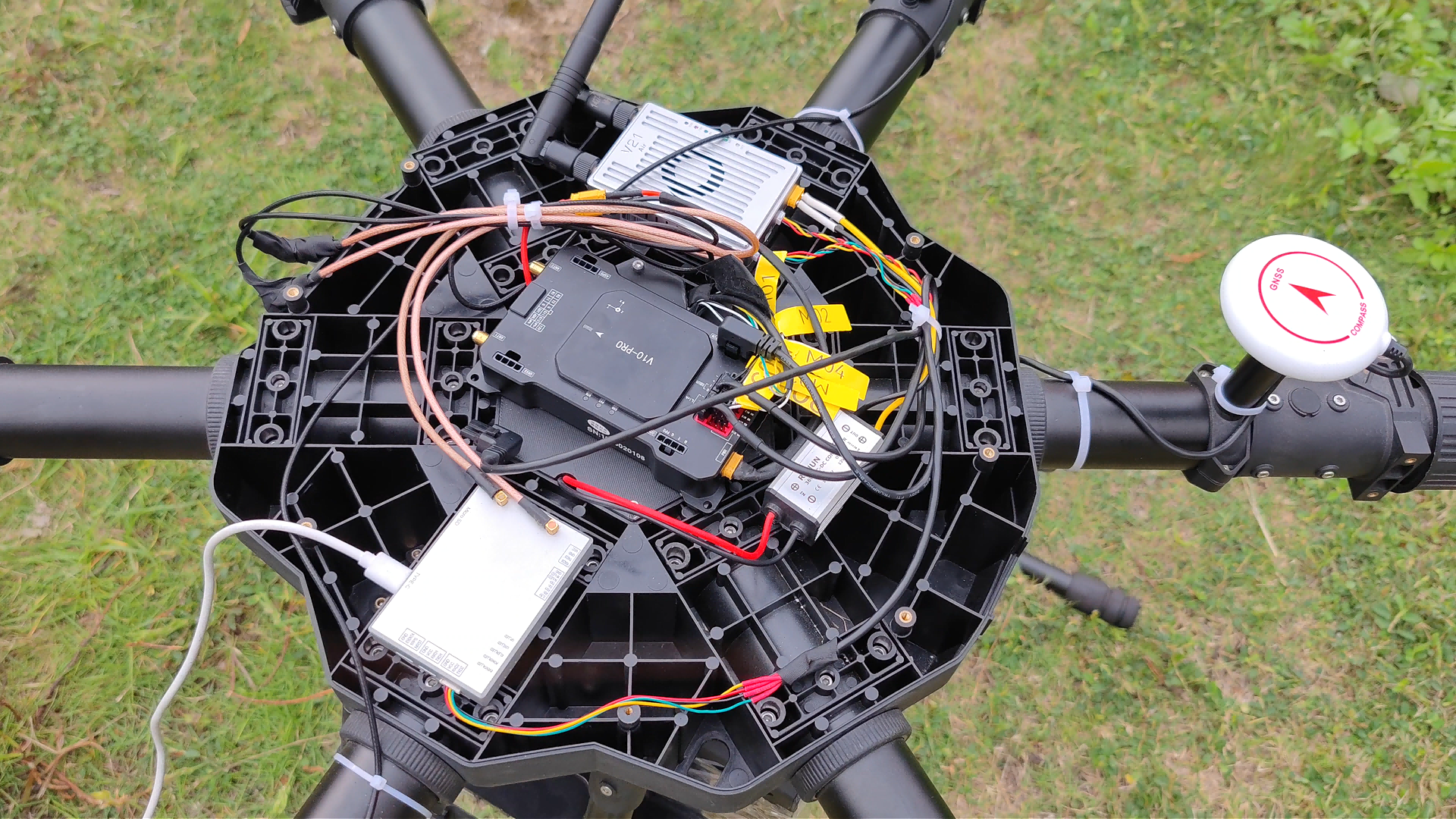
The strongest evidence of capability is a program that has already run at scale. Jumpstar's documented case is a GNSS positioning program for drone manufacturers, lasting five years with a quantity of 500 units. The product used in the case has been adopted by drone manufacturer clients from global markets including India, China, the UAE, and the Czech Republic.
The application was GNSS positioning for drones, and the technical challenge was structural: the system needed centimeter-level RTK positioning and high-precision attitude output without relying on magnetic sensors, performing reliably under both static and dynamic conditions. The solution used the P-Box-X10 receiver, whose capabilities directly addressed the requirement:
- 544 hardware channels — simultaneously tracks all visible satellite signals for full-coverage positioning;
- Triple-band multi-constellation support — GPS, BDS, GLONASS, Galileo, QZSS, NavIC, and SBAS;
- Dual-antenna high-precision heading — up to 0.03° at 5 m baseline, with no magnetic-sensor dependency;
- 100 Hz ultra-high update rate — position and observation output with under 10 ms latency;
- AIM+ multi-layer anti-jamming — AIM+, IONO+, Lock+, APME+, and RAIM+ for stable positioning in complex electromagnetic environments;
- Rich communication interfaces — 3×UART, Ethernet, Type-C, and a TF card slot for data logging;
- Base and rover dual-mode — flexible switching between base-station and rover-station operation;
- Industrial-grade reliability — -40°C to +85°C operating temperature and 4.5–12 V input range, with OSNMA anti-spoofing and interference monitoring.
For buyers conducting a capability audit, this case answers three questions at once. Does the manufacturer understand high-dynamic applications? Can it design for non-magnetic attitude determination? Does it have multi-year, multi-region supply experience?
Beyond the UAV case, the same capability layers map to other scenarios. Precision agriculture benefits from RTK modules with dual-band or multi-band accuracy and base/rover configurations, such as the JS-RK43-3 smart antenna with 1.0 cm + 1 ppm RTK horizontal accuracy, or the JS-X11 all-in-one RTK base station. Fleet management and marine navigation use vehicle-mounted antennas and GNSS receivers with wider voltage ranges, such as the JS-HAC148A antenna. Surveying and mapping applications can draw on high-precision receivers with 100 Hz update rates and TF logging for post-processing workflows.
Capability Audit Reference Table
The table below consolidates the five layers, the verification question for each, and the verified Jumpstar evidence from the company profile, quality certificate, production capacity, and case history. When a supplier cannot provide corresponding evidence for a layer, treat that layer as an unverified risk rather than assuming it.
| Capability Layer | What to Verify | Why It Matters in Evaluation → Execution | Verified Jumpstar Evidence |
|---|---|---|---|
| Engineering & Customization | OEM/ODM services; which elements can be changed | Customization gaps cause rework at the integration stage | OEM & ODM production; customization of modules, PCBA, antennas, functions, ports, interfaces, logo; 20 R&D engineers |
| Manufacturing & Scale | Factory area, production lines, monthly/annual capacity | Inadequate capacity delays program ramp-up | 5,000㎡ factory; SMD, CNC, and lab operations; 50,000 units/month; 100,000 units/year; 200 employees |
| Quality & Testing | Testing policy, certification, traceability | Undetected failures surface as field failures in safety-critical systems | 100% testing before shipment; ISO9001:2015 certificate UQ231801R2 (R&D and sales of GPS module) |
| Application & Integration | Applicable industries, interfaces, environmental ratings, reference programs | Wrong form factor or interface breaks the integration; prior cases reduce technical risk | Portfolio spans RTK modules, smart antennas, receivers, base stations, anti-jamming antennas; UAV, agriculture, automotive, marine, robotics, surveying; five-year drone manufacturer case |
| Commercial & Supply | MOQ, lead time, payment terms, delivery method, after-sales support | Commercial mismatches appear at the moment of scaling | Production MOQ 500 units; sample MOQ 1 unit; 30-day lead time; EXW; flexible T/T; remote after-sales support |
Frequently Asked Questions
What quality certifications should an OEM/ODM high-precision GNSS manufacturer for UAVs hold?
For industrial GNSS sourcing, the practical baseline is a documented quality management system combined with a verifiable testing policy. Jumpstar holds ISO9001:2015 certification (certificate number UQ231801R2, issued by Beijing United Intelligence Certification Co., Ltd., scope: R&D and sales of GPS module, valid through December 10, 2026) and applies 100% testing to all units before shipment. Many Jumpstar modules are RoHS compliant. In agricultural positioning, ISO 12188 parts 1 and 2 define standard test procedures for positioning and guidance systems — a useful reference for verifying test methodology.
What customization capabilities should a high-precision GNSS OEM/ODM partner provide?
OEM/ODM capability is the ability to adapt the product to the buyer's integration constraints. Jumpstar supports customization of modules, PCBA, antennas, functions, ports, interfaces, and logo, backed by a 5,000㎡ factory, 20 R&D engineers, and SMD, CNC, and laboratory facilities. For a UAV or robotics program, this means the partner can adjust interface design, integrate the antenna, and tune RF performance around the host system instead of forcing the host system to accept a fixed module.
What is the minimum order quantity for OEM/ODM high-precision GNSS solutions?
For series production, Jumpstar's MOQ is 500 units per model, with a typical lead time of 30 days and 100% testing before shipment. For evaluation and prototyping, sample orders start at 1 unit, with EXW delivery and flexible T/T payment terms. Because the sample MOQ is low, engineering teams can validate integration before committing to production volumes.
Can we evaluate a sample before placing an OEM/ODM production order?
Yes. Jumpstar supports sample requests with an MOQ of 1 unit, and every unit — samples and series units alike — is tested 100% before shipment. The recommended path is to send the interface and mechanical requirements first, validate the sample in your application environment, and then release the production order at the 500-unit MOQ.
How long does an OEM/ODM high-precision GNSS order take from design confirmation to delivery?
Jumpstar's typical production lead time is 30 days, based on a monthly production capacity of 50,000 units and an annual output of 100,000 units. All units are tested before shipping, and after-sales support is provided remotely. To get a lead-time and cost estimate for your specific configuration, send your project requirements to sales@jgnss.com or contact +86 136-2236-7049 (WhatsApp available).
From Capability Audit to Controlled Execution
A high-precision GNSS module is only as reliable as the production system that builds it. For OEMs and integrators moving from evaluation to execution, the practical conclusion is that capability must be audited in five layers: engineering and customization, manufacturing, quality and testing, application and integration, and commercial and supply terms.
Using Jumpstar as an illustration, a credible OEM/ODM partner should be able to show documented customization services, a physical factory with stated capacity, a 100% testing policy, a valid ISO9001:2015 certificate, application case studies, a production MOQ of 500 units, a typical 30-day lead time, and 1-unit sample availability. These facts are verifiable before any large commitment — and they are the facts that determine whether a program ships on time.
If your team is evaluating a high-precision GNSS partner for a UAV, agriculture, autonomous vehicle, or industrial program, the next step is to validate the layer that matters most to your design: request a sample and test it in your own environment.
Next step: get the Jumpstar company profile and sample support
• Company profile / brochure: Jumpstar Company Profile 2026 (PDF)
• Website: www.jgnss.com
• Email: sales@jgnss.com
• Tel / WhatsApp: +86 136-2236-7049
• Address: Room 1305, Block A, Building 1, Lechuanghui Mansion, No. 1211 Guanguang Road, Longhua District, Shenzhen, China. 518110
Have Questions or Need More Details?
Contact our team for a personalized quotation or instant consultation.
Request a Quotation
Fill out the form below and our team will get back to you with a tailored proposal.
WhatsApp Direct Chat
Prefer to chat in real-time? Message us on WhatsApp for instant assistance & quick answers.
- Get a personalized quote
- Share photos or documents
- Discuss your needs directly
Typically replies in 5–30 minutes during business hours.