
High-Precision GNSS Compliance: Scope by Form Factor
Compliance for high-precision GNSS hardware is not one certificate that travels with a brand name. It is a file that changes shape with the form factor you buy and the market where your finished system is placed: a receive-only antenna carries a different documentation burden from a soldered dual-band module, and both differ from a housed RTK receiver with an integrated cellular modem. Two rules organise the whole picture. A management-system certificate describes a process, not a product. A component declaration stops at the component boundary, so the integrator—not the module supplier—owns the file for the finished assembly.
This guide maps that path across six form factors: GNSS RTK receiver, RTK board, GPS GNSS module, RTK GNSS module, GNSS antenna and smart antenna. It uses the documentation published by Jumpstar as the worked example, because its record is specific enough to check line by line—certificate number, scope wording, expiry date, model-level statements—and because the gaps in that record show exactly what a buyer still has to request.
Jumpstar (Shenzhen Jumpstar Technology Co., Ltd.) is a Shenzhen-based GNSS hardware manufacturer founded in 2013, operating a 5,000 m² factory with 100 employees and 30 R&D engineers, producing RTK modules, GNSS antennas, GNSS receivers and timing modules, with a reported 70% export ratio and main markets in the EU, USA and Middle East.
- A split between the four document types that buyers routinely conflate.
- A form-factor matrix showing where compliance scope actually moves.
- A six-step verification workflow you can run before a sample order.
- The supplier question set to send, including the CE-marking question.
Why compliance evidence does not travel across form factors
The first practical problem is document classification. In most GNSS procurement files, four different kinds of paper arrive in the same folder, and each one answers a different question.
| Document type | What it establishes | What it does not establish | Status in this supplier's published record |
|---|---|---|---|
| Quality management certificate | That a management system has been audited against a standard within a stated scope | Product conformity, radio approval, or performance in your application | ISO 9001:2015 certificate UQ231801R2, scope 'R&D and sales of GPS module', valid 2023-12-11 to 2026-12-10 |
| Substance declaration | That a named model is declared compliant with a material restriction such as RoHS | Electromagnetic compatibility, radio spectrum approval or ingress protection | Stated per model on the datasheets of the modules and the JS-HAC18A-F antenna; not stated on the P-Box-X6_Pro S specification sheet |
| Market-access declaration | That the manufacturer claims conformity for a named model and variant under the rules of a destination market | Independent performance evidence, or conformity of your finished assembly | Not included in the public documentation reviewed for this guide; request per model and market |
| Datasheet operating limits | The declared operating envelope: temperature, voltage, current, interface, ingress condition | Tested behaviour outside the stated conditions | Published per model, and the ranges differ by model within the same catalogue |
Two consequences follow. First, a certificate with the word 'module' in its scope wording does not automatically describe an antenna or a housed receiver. Second, validity dates are procurement data, not paperwork detail: the ISO 9001:2015 certificate above expires on 10 December 2026, which falls inside the delivery window of an order placed now. Ask for the renewal record before you fix a purchase order that ships after that date.
What the category-level market data does and does not tell a buyer
Commercial research puts the wider category in context. Fortune Business Insights reported the global GNSS market at USD 335.04 billion in 2025, with a projection to USD 844.55 billion by 2034, and Data Insights Reports valued the high-precision GNSS receiver segment at USD 3.10 billion in 2025. Both are commercial research estimates, and both describe market size, not regulatory status.
That distinction matters in practice. Market growth figures tell a procurement team that supply will stay competitive and that module roadmaps will keep moving. They say nothing about which declaration a customs broker, a notified body or a fleet customer's own quality department will ask you for on a Tuesday afternoon. The document set is built bottom-up, from the form factor and the destination market, which is why a supplier-level view is not enough.
The form-factor documentation matrix
The matrix below is the working core of this guide. Each row names a form factor, a documented example from the catalogue, the attributes that shift the compliance file, the documents to request, and the single question that most often decides the outcome.
| Form factor and example | What is inside the part | Attributes that shift the file | Documents to request | Deciding question |
|---|---|---|---|---|
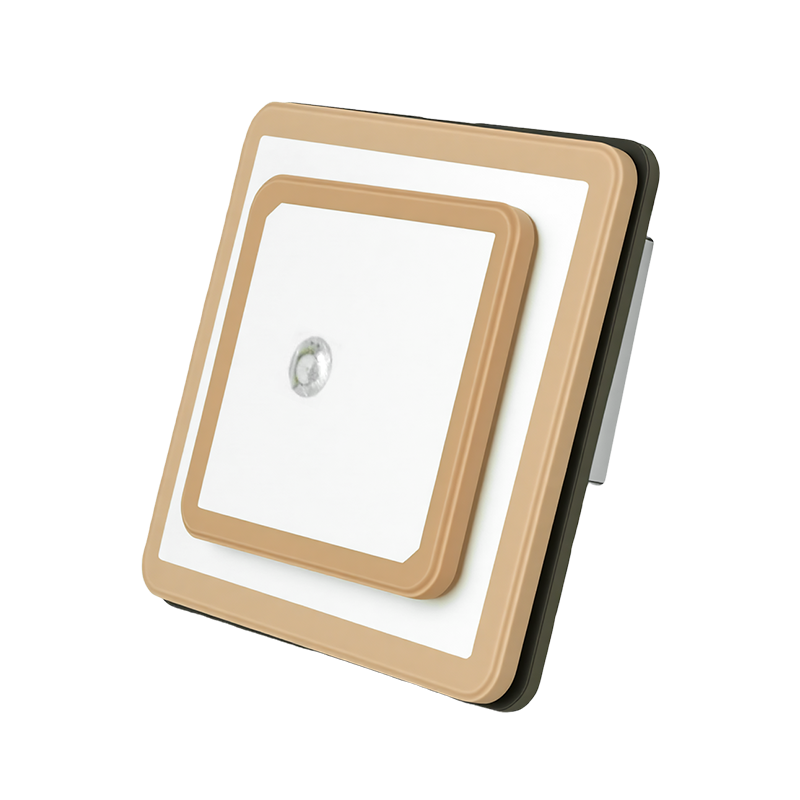
| GNSS antenna — JS-HAC18A-F | Active helical antenna with LNA, SMA male connector | LNA gain 33±2 dB; 2.8–3.3 V DC; ≤30 mA; IP65 with mated SMA connector; −30 °C to +70 °C; RoHS declared | Antenna model declaration; ingress test report that states the mated connector condition; RoHS statement | Does the IP65 claim depend on the connector and cable you will actually use? |
| GPS GNSS module — JS-ATP45-M, JS-ARP30-2, JS-AD56UB8 | Receiver component in a plastic/metal or ceramic assembly, no system enclosure | JS-ATP45-M 2.8–5.5 V; JS-ARP30-2 3.3–5.5 V; JS-AD56UB8 4.5–12 V; all −40 °C to +85 °C without farad capacitor; farad capacitor limited to −25 °C to +60 °C; RoHS declared | Model declaration; interface-variant list; RoHS; any report that names the variant tested | Which interface variant is on the purchase order? |
| RTK GNSS module — JS-ARK37-3, JS-RK40, JS-UK40, JS-SK40, JS-RK26-U | RTK receiver with an integrated active helical antenna; JS-RK26-U integrates GNSS and inertial sensing in a 16.2×12.2×2.3 mm package | JS-SK40 adds an external MMCX antenna path with 15–35 dB gain, 3.0–5.5 V bias and a 150 mA current limit; JS-RK40 rated −40 °C to +70 °C while JS-SK40, JS-UK40 and JS-ARK37-3 are rated −40 °C to +85 °C | Declaration naming the model; antenna configuration statement; RTK test conditions; RoHS | Is the built-in antenna the only permitted antenna in your configuration? |
| RTK board — JS-CK39-A | Board-level RTK positioning product listed in the catalogue | Board parameters were not part of the specification set reviewed for this guide | Full datasheet, board revision history, declarations for the board | Which board revision and firmware will ship? |
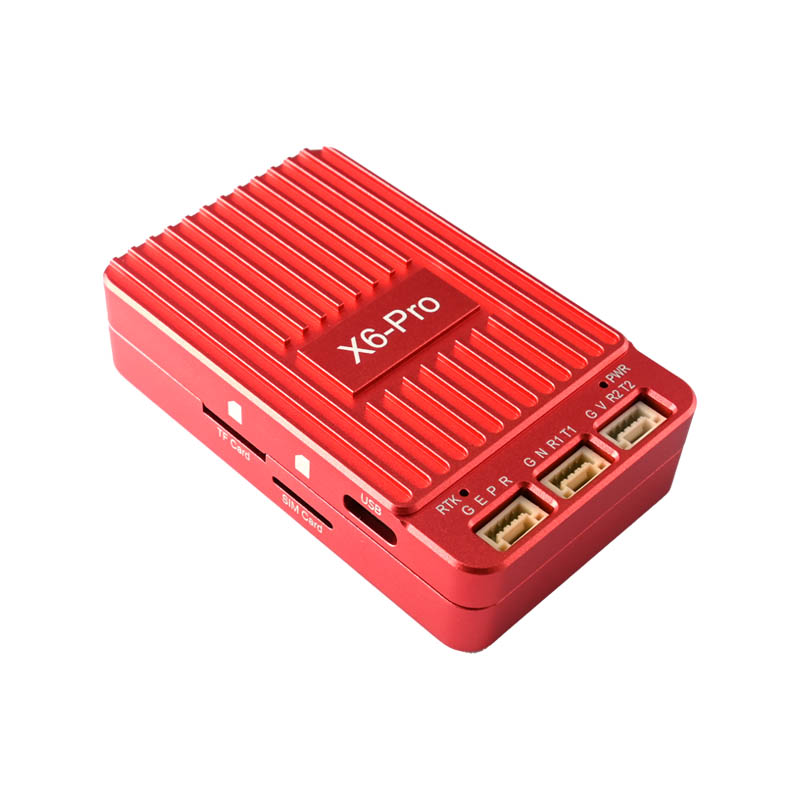
| GNSS RTK receiver — P-Box-X6_Pro S | Enclosed receiver, single-antenna S1 or dual-antenna S2, with an integrated 4G module | 4.5–12 V DC; −40 °C to +85 °C; 4G module EG25-G covering LTE-FDD/TDD, UMTS and GSM; protocols NMEA 0183, SBF, RINEX, RTCM 2.x/3.x, CMR v2.0, CMR+; no RoHS statement on the reviewed specification sheet | Full product declaration; radio evidence covering the cellular modem; RoHS; label artwork; manual language | Does the declaration cover the cellular modem and the antenna you will fit? |
| Smart antenna — JS-NK43-1, JS-UK43, JS-RK43-3; X28 per datasheet | Enclosure containing antenna, receiver and, on some models, several radio interfaces | X28 datasheet lists rover and base-station dual mode, RTK accuracy of 2.5 cm ± 1 ppm, and GPRS, Bluetooth/Wi-Fi, LoRa and CAN interfaces | Declaration for the exact model; radio evidence for each enabled interface; mounting and ground-plane conditions | Which radio interfaces are enabled in your SKU? |
Three points where compliance scope shifts
Shift 1 — From component to assembly
A module datasheet describes a part, not your product. The P-Box-X6_Pro S, for example, accepts antenna pre-amplification between 15 dB and 50 dB with a bias voltage of 3.0 V to 5.5 V. Choose an antenna outside that window and the receiver's own specification no longer describes the assembly you built. The declaration for the assembled host belongs to whoever places it on the market, and that is usually the integrator.
The practical rule: every parameter that couples two parts—antenna gain window, bias voltage, connector type, ground-plane assumption, cable loss—has to appear in your own configuration record, because no single supplier document covers the joint.
Shift 2 — From passive to powered
An active antenna is a powered device, and its claims are conditional. The JS-HAC18A-F declares IP65 with a mated SMA connector, an LNA gain of 33±2 dB, ≤30 mA at 2.8–3.3 V DC, and an operating range of −30 °C to +70 °C. That temperature window is narrower than the −40 °C to +85 °C published for the modules and receivers, so the rated range of an assembly is set by its weakest element, not by the receiver on the box.
Antenna ports on the module side add a second condition. The JS-SK40 external path limits bias to 3.0–5.5 V at 150 mA with a 15–35 dB gain window; the JS-UK40 and JS-ARK37-3 ship with built-in active helical antennas. Any external antenna you add becomes part of the tested configuration referenced in your file.
Shift 3 — From receiver-only to receiver-with-radio
Add a cellular modem and the file grows. The P-Box-X6_Pro S integrates an EG25-G module supporting LTE-FDD/TDD, UMTS and GSM across global bands, which introduces radio questions that a bare module never raises, plus the need for the modem maker's own approvals. The X28 smart antenna datasheet goes further, listing GPRS, Bluetooth/Wi-Fi, LoRa and CAN interfaces—each one an additional item in the question set.
Keep functional security features in their own category. Galileo OSNMA anti-spoofing and AIM+ style anti-jamming are integrity and resilience functions described in the product documentation; they support a system design decision, but they are not market-access approvals and should not be presented as substitutes for one.
Regional checkpoints: building the market × form-factor map
Regional requirement checkpoints are easier to manage as a grid than as a list. Put destination markets on one axis and form factors on the other, then place the document each cell needs. The supplier record lists coverage across the EU, USA, Middle East, Africa and Asia, with the EU, USA and Middle East named as main markets and a 70% export ratio.
- Ask in every market: a declaration that names the exact model and variant; the test reports behind it; label and marking artwork; the language of the user manual; the identity of the economic operator responsible in that market; and the validity dates of every document.
- Ask for assemblies, not just parts: whether the declaration covers the enclosure, the antenna you fit, and the modem if one is integrated.
- Ask separately for application layers: fleet, automotive and UAV programmes usually add their own qualification on top of market access. The reviewed materials for this catalogue do not include automotive qualification documentation, so a road-vehicle programme should request it explicitly rather than infer it from an industrial temperature rating.
Treat an unanswered cell as a genuine open item in the file. A supplier who says 'not disclosed' has told you something useful; a supplier who says 'not capable' is making a different statement, and the two should never be merged in a procurement summary.

Six-step verification workflow
- Freeze the model, the variant and the configuration. The P-Box-X6_Pro S exists as a single-antenna S1 and a dual-antenna S2 build, with heading and attitude figures that differ by baseline: 0.15° heading and 0.25° attitude at 1 m, 0.03° and 0.05° at 5 m. The JS-ATP45-M ships as TTL, RS232 or USB versions (JS-ATP45-M, JS-ATP45R-M, JS-ATP45B-M), the JS-AD56UB8 as -C, -T, -M and -S versions, and the JS-ARP30-2 as UART, USB or RS232. A report that does not name the variant does not close the item.
- Map destination markets to the document set using the grid above, one row per shipping destination.
- Check the quality certificate on scope and date. Read the scope wording—here 'R&D and sales of GPS module'—against the product lines you are actually buying, and diary the expiry date of 10 December 2026.
- Match each report to model, variant, antenna and firmware. If the antenna is not named in the test configuration, the report describes a different assembly.
- Verify the declared envelope against the deployment. Compare operating temperature, the farad-capacitor limitation of −25 °C to +60 °C outside which hot start is unavailable, humidity at 95% non-condensing, ingress conditions, and supply voltage tolerance across every part in the chain.
- Record the handoff and set a review date. Note who holds which document, at which revision, and when each one expires.

Production evidence belongs in a different column. The capability record states 100% testing, OEM and ODM support covering modules, PCBA, antennas, functions, ports, interfaces and logo, a monthly capacity of 50,000 units and a 30-day lead time. Those facts answer capacity and customisation questions; they do not certify a product, and they should be filed as manufacturing evidence rather than conformity evidence.
Supplier questions to send before a sample order
- Which model, variant and firmware revision will the declaration and test reports name?
- Does your quality certificate scope cover this product line, and what is the renewal status before 10 December 2026?
- Which market-access declarations exist for this exact model, and in which markets?
- Does the declaration cover the integrated cellular modem, and can you supply the modem maker's own approvals?
- Which antenna appears in the tested configuration, and is an external antenna permitted within the same file?
- What are the ingress-protection conditions, including connector mating and cable type?
- What is the operating range for the complete assembly, part by part?
- Which interface variant was tested, and does the variant suffix appear on the report?
- What label, marking and manual language will ship with the units?
- Who is the responsible economic operator in our destination market, and how are document revisions controlled?
Where this matters in deployment: three scenarios
UAV surveying and mapping. The application record specifies airborne mounting, −40 °C to +85 °C operating temperature, ≤95% non-condensing humidity, 4 g acceleration and vibration exposure, with interference from wideband, narrowband and pulsed sources. The compliance question is not only whether the module is declared, but whether the tested configuration included the antenna and mounting used in flight.
Vehicle and fleet positioning. The fleet record describes fixed in-vehicle mounting, 4.5–12 V DC supply, urban canyons, tunnels, elevated roads and multipath, plus electromagnetic interference from vehicle electronics. Each of those conditions maps to a document: supply tolerance, ingress, vibration and radio coexistence with the vehicle's own electronics.
Robotics, agriculture and industrial integration. Module application lists cover autonomous robots, precision agriculture and industrial control. Here the critical item is usually the handoff: the integrator needs the module declaration, the variant list, and a written statement of which parameters the supplier guarantees and which depend on the host design.

Conclusion
Compliance for high-precision GNSS hardware is assembled, not inherited. Start with the documents that exist and are checkable—the ISO 9001:2015 certificate UQ231801R2 with its stated scope and its 10 December 2026 expiry, the model-level RoHS statements on the module and antenna datasheets, and the published operating envelopes. Then request what the file is missing: model-level market-access declarations, the test reports behind them, the antenna and variant conditions, and the label and manual details. Finally, freeze the configuration in writing, because the same catalogue number can describe different interfaces, different antennas and different temperature ranges.
Buyers who run that sequence end up with a file that survives an audit and a customer questionnaire. Buyers who accept a brand-level assurance in place of a model-level document usually discover the gap during first-article inspection, which is the most expensive possible moment.
FAQ
How do you verify a CE-certified high-precision GNSS solutions manufacturer?
Verify the declaration, not the claim. CE marking is generally a manufacturer's declaration supported by a technical file, and it is a different instrument from a quality management certificate, so the two should never be accepted as substitutes. Ask for the declaration of conformity that names the exact model and variant, the list of standards it cites, the test reports behind it, the marking location on the product and packaging, the manual language, and the responsible economic operator in the destination market. In the documentation reviewed for this guide, the supplier's publicly listed certification is ISO 9001:2015 certificate UQ231801R2, issued by Beijing United Intelligence Certification Co., Ltd., with the scope 'R&D and sales of GPS module', valid from 2023-12-11 to 2026-12-10, plus model-level RoHS statements on the datasheets of JS-ATP45-M, JS-ARP30-2, JS-AD56UB8, JS-RK40, JS-SK40, JS-UK40, JS-ARK37-3, JS-RK26-U and JS-HAC18A-F. Model-level CE declarations were not part of that set and should be requested per model and per market.
Does a module's certification cover the finished device I build around it?
No. A component declaration stops at the component boundary. Once you add an enclosure, a cable, an antenna and a power stage, the assembled product is a new configuration, and the conformity file for that assembly belongs to the party placing it on the market. What transfers from the supplier is the model declaration, the variant list, the datasheet envelope and any test reports that name the tested configuration. What does not transfer is a declaration for your host—request the supplier's documents, then document your own assembly separately.
Does an RTK module with a built-in antenna change the compliance scope?
It changes what must be described. Modules such as JS-ARK37-3, JS-RK40, JS-UK40 and JS-SK40 integrate an active helical antenna, so antenna and receiver conditions are documented together—and the JS-SK40 also permits an external MMCX antenna with 15–35 dB gain, 3.0–5.5 V bias and a 150 mA current limit. The questions to ask are whether the built-in antenna is the only permitted configuration, whether an external antenna was included in any tested setup, and whether the temperature rating applies to the complete unit. Note that JS-RK40 is rated −40 °C to +70 °C while JS-SK40, JS-UK40 and JS-ARK37-3 are rated −40 °C to +85 °C.
What commercial terms affect a compliance sample order?
The documented terms are a minimum order quantity of 500 units, a 30-day lead time and a monthly capacity of 50,000 units, with OEM and ODM customisation available for modules, PCBA, antennas, functions, ports, interfaces and logo, and 100% testing stated as the quality-control approach. Published price data is not available in the reviewed materials and should be obtained as a formal quotation, because compliance testing and customisation scope—not unit count alone—usually drive the total cost of a first article.
What should a compliance sample request contain?
A sample request should state the model, the variant suffix and the firmware revision; the antenna and cable you intend to use; the destination markets; the assembly conditions, including enclosure and power; and the documents you expect to receive with the sample. Ask for the sample to be drawn from the same production configuration as the units in the quotation, and ask for the datasheet revision alongside it, since an undated datasheet cannot anchor a technical file.
How long is delivery, and what happens if a certificate expires during the programme?
The stated lead time is 30 days. The ISO 9001:2015 certificate on record expires on 10 December 2026, so a programme that ships after that date should request the renewal certificate before the purchase order is released, and the received document should be filed against the order. For a sample, a quotation or the full catalogue documentation—including the RoHS statements and the specification sheets referenced in this guide—you can download the Jumpstar company profile or send the configuration list directly to the supplier team for a document set matched to your model and market.
Have Questions or Need More Details?
Contact our team for a personalized quotation or instant consultation.
Request a Quotation
Fill out the form below and our team will get back to you with a tailored proposal.
WhatsApp Direct Chat
Prefer to chat in real-time? Message us on WhatsApp for instant assistance & quick answers.
- Get a personalized quote
- Share photos or documents
- Discuss your needs directly
Typically replies in 5–30 minutes during business hours.