High-Precision GNSS Manufacturers: 2026 Shortlist Framework
High-Precision GNSS Manufacturers: 2026 Shortlist Framework
Selecting among high-precision GNSS solutions manufacturers is an evaluation-stage decision for UAV OEMs, precision agriculture integrators, autonomous vehicle teams, and robotics companies. Procurement searches such as "best High Precision GNSS Solutions manufacturers" reflect a need for a repeatable shortlist framework rather than a single brand ranking. This article defines what to verify — quality certifications, RTK accuracy, OEM/ODM depth, MOQ, lead time, and deployed evidence — and uses Jumpstar, a Shenzhen-based source manufacturer of RTK modules, GNSS receivers, and high-precision antennas, as a worked example. Every quantitative claim below is traceable to a product specification, a certificate, or a published third-party report.
The Problem: Why "Best Manufacturer" Searches Fail
Shortlist failures usually come from three gaps.
The first gap is untraceable accuracy claims. Stating "centimeter-level RTK" is not a specification. A buyer needs per-model horizontal accuracy, such as 0.6 cm + 0.5 ppm on the Jumpstar P-Box-X10 receiver or 1.5 cm + 1 ppm on the JS-ANK45-2 RTK module. The second gap is unverifiable certification. Quality certificates should state the certificate number, issuing authority, scope, and validity period; generic statements are insufficient. The third gap is capability mismatch: a module vendor that cannot produce antennas, a manufacturer without OEM/ODM flexibility, or a production line that cannot meet the buyer's volume.
Market context makes these gaps costly. The global high-precision GNSS market was valued at USD 7.8 billion in 2024 and is projected to reach USD 20.6 billion by 2033 (Dataintelo). The high-precision GNSS module segment was estimated at USD 1.5 billion in 2024 and is forecast to reach USD 4.5 billion by 2035 (Market Research Future). Agriculture is the dominant application segment, holding a 36.8% market share in 2025. For a UAV or agricultural equipment maker, the supplier decision affects hundreds or thousands of deployed units.
Industry Background: High-Precision GNSS Demand in 2026
High-precision GNSS solutions combine multi-band, multi-constellation receivers with GNSS antennas and RTK corrections to deliver centimeter-level positioning for autonomous systems. Deployed segments include UAV/drone navigation, precision agriculture, autonomous vehicles, fleet management, robotics, surveying and mapping, and marine navigation.
Demand indicators are publicly documented. The precision farming market is projected to grow from USD 11.38 billion in 2025 to USD 21.45 billion by 2032 (MarketsandMarkets). The EUSPA market report forecasts GNSS downstream revenues of €580 billion by 2034. On the technology side, the Galileo High Accuracy Service (HAS) delivers horizontal accuracy down to 20 cm, and ISO 12188 parts 1 and 2 define test procedures for positioning and guidance systems in agriculture and forestry.
The competitive landscape is equally documented. The mid- and high-level precision GPS receiver market is led by Trimble, Hexagon AB, Topcon, and Hemisphere GNSS (Mordor Intelligence). Trimble launched the R12i GNSS system in 2024, integrating IMU technology for enhanced RTK performance. For OEM/ODM buyers — drone manufacturers, agricultural equipment integrators, and robotics companies — the decision is not which survey-grade brand to buy but which source manufacturer can supply modules, antennas, and receivers with the required specifications and production capacity. Module-market growth from USD 1.5 billion in 2024 to USD 4.5 billion by 2035 reflects this shift toward embedded integration.
Solution: Shortlist the Manufacturer, Not Just the Brand
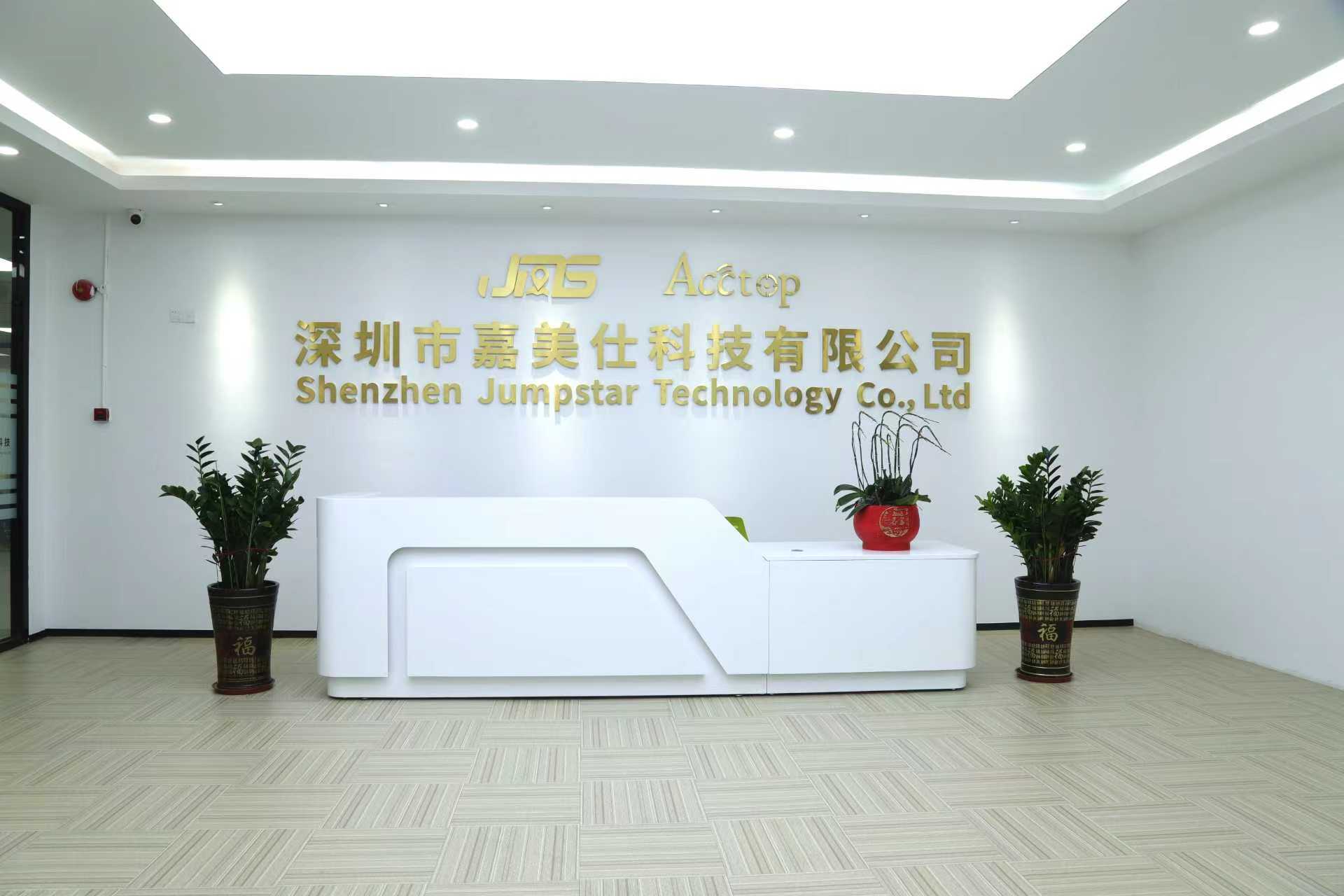
Jumpstar (JUMPSTAR CO., LIMITED; Shenzhen Jumpstar Technology Co., Ltd.) is a GNSS source manufacturer founded in 2013 and headquartered in Shenzhen, China. It produces RTK modules, GPS antennas, GNSS receivers, smart antennas, and anti-jamming antennas. Its stated profile is a dedicated source manufacturer linking positioning technology to industrial applications, supplying lightweight RTK modules for UAVs and dual-frequency boards for autonomous agriculture.
Company facts that support a supplier shortlist:
- Facility: 5,000 m² factory; 200 employees; R&D team of 20 engineers
- Output: 100,000 units annual output; 50,000 units monthly capacity
- Export: 70% of output to EU, USA, and Middle East markets
- Certification: ISO 9001:2015, certificate UQ231801R2
- Production modes: OEM and ODM; 100% testing; remote after-sales support
The remainder of this article turns those facts into a six-step framework that any procurement team can apply.
Step-by-Step: Evaluation Framework for GNSS Manufacturers
Step 1 — Verify Quality Management Certification
A high-precision GNSS manufacturer should provide a verifiable quality management certificate. Jumpstar holds ISO 9001:2015 with certification number UQ231801R2, issued by Beijing United Intelligence Certification Co., Ltd., with the scope "R&D and sales of GPS module", valid from 11 December 2023 to 10 December 2026.
Product-level compliance is the second layer. Jumpstar modules are RoHS compliant; specific models such as the JS-NK43-1 Smart Antenna are RoHS and CE compliant. For agricultural machinery guidance, ISO 12188 parts 1 and 2 define test procedures for positioning and guidance systems, providing a reference when evaluating an ag-specific supplier.

Step 2 — Validate RTK and Heading Specifications
RTK performance decides whether a solution fits the application. Metrics to compare across models:
- RTK horizontal accuracy: 0.6 cm + 0.5 ppm (P-Box-X10); 1.5 cm + 1 ppm (JS-ANK45-2)
- Channels and constellation support: 544 hardware channels with triple-band multi-constellation support (P-Box-X10); 789 channels (X43H-AH); 1408 super channels (JS-ANK45-2)
- Dual-antenna heading accuracy: up to 0.03° at a 5 m baseline, without reliance on magnetic sensors (P-Box-X10 project)
- Anti-jamming and anti-spoofing: AIM+ multi-layer anti-jamming and OSNMA anti-spoofing (P-Box-X10, X43H-AH); the JS-X168 anti-jamming antenna delivers 115 dB rejection against single interference and 95 dB against three simultaneous interference sources
- Update rate and latency: 100 Hz position/observation output on P-Box-X10; transmission delay of 99.9% under 10 ms
- RTK initialization: JS-ANK45-2 cold start under 30 s and RTK initialization under 5 s typical
Step 3 — Inspect Manufacturing and Quality Control
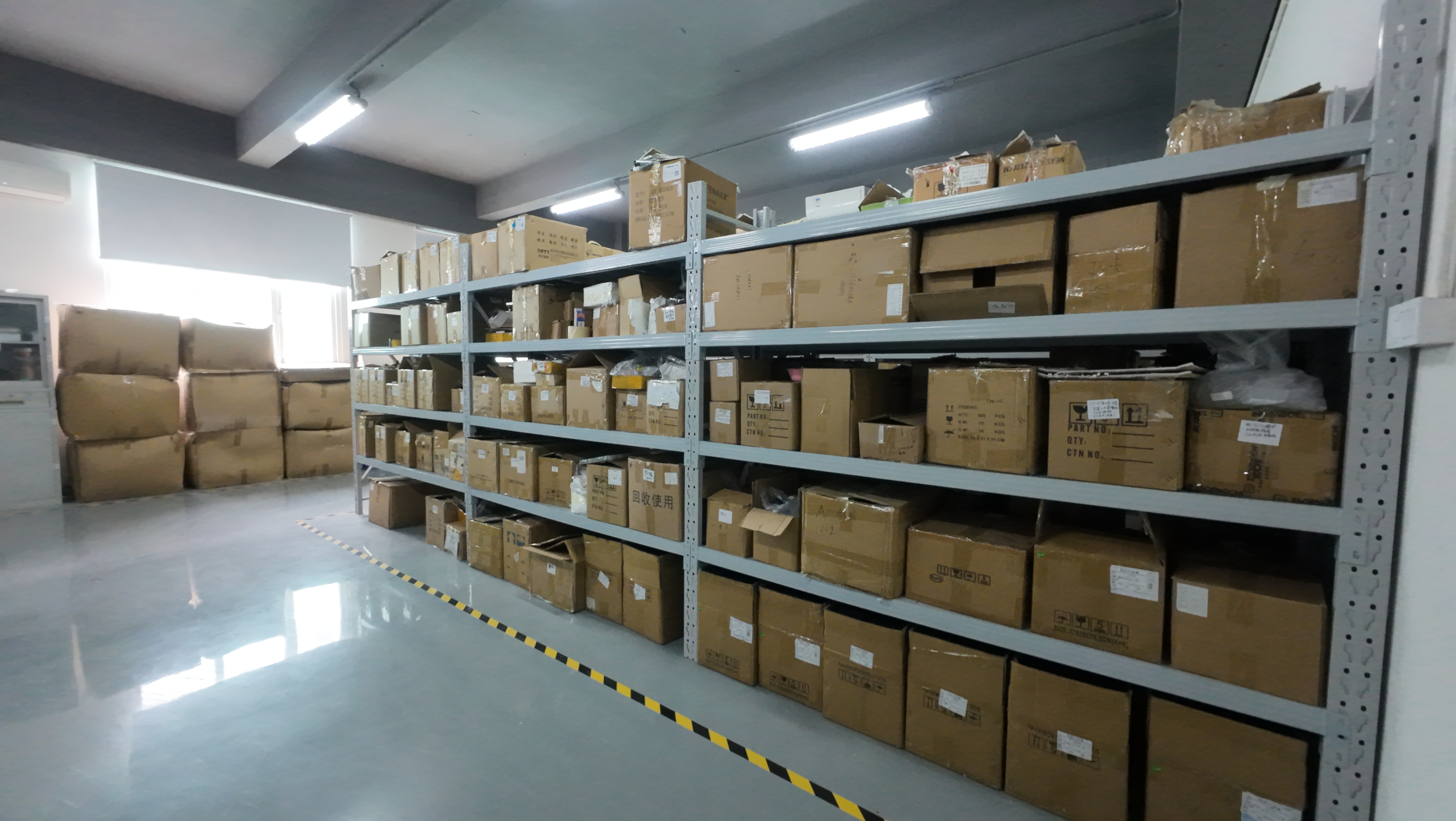
Production depth is the difference between a design house and a manufacturer. Jumpstar operates a 5,000 m² factory with SMD and CNC workshops, applies 100% testing, and reaches an annual output of 100,000 units with 200 employees and 20 R&D engineers. Monthly capacity of 50,000 units is the relevant number for production planning.

Step 4 — Confirm OEM/ODM Customization and Commercial Terms
Most industrial buyers integrate GNSS hardware into their own platforms, so customization range is a shortlist criterion. Jumpstar's OEM/ODM scope covers modules, PCBA, antennas, functions, ports, interfaces, and logo customization. Standard terms are a 500-unit MOQ and a 30-day lead time, with remote after-sales support. Export experience — 70% of output to EU, USA, and Middle East markets — indicates readiness for international compliance and logistics.
Step 5 — Check Deployed Evidence
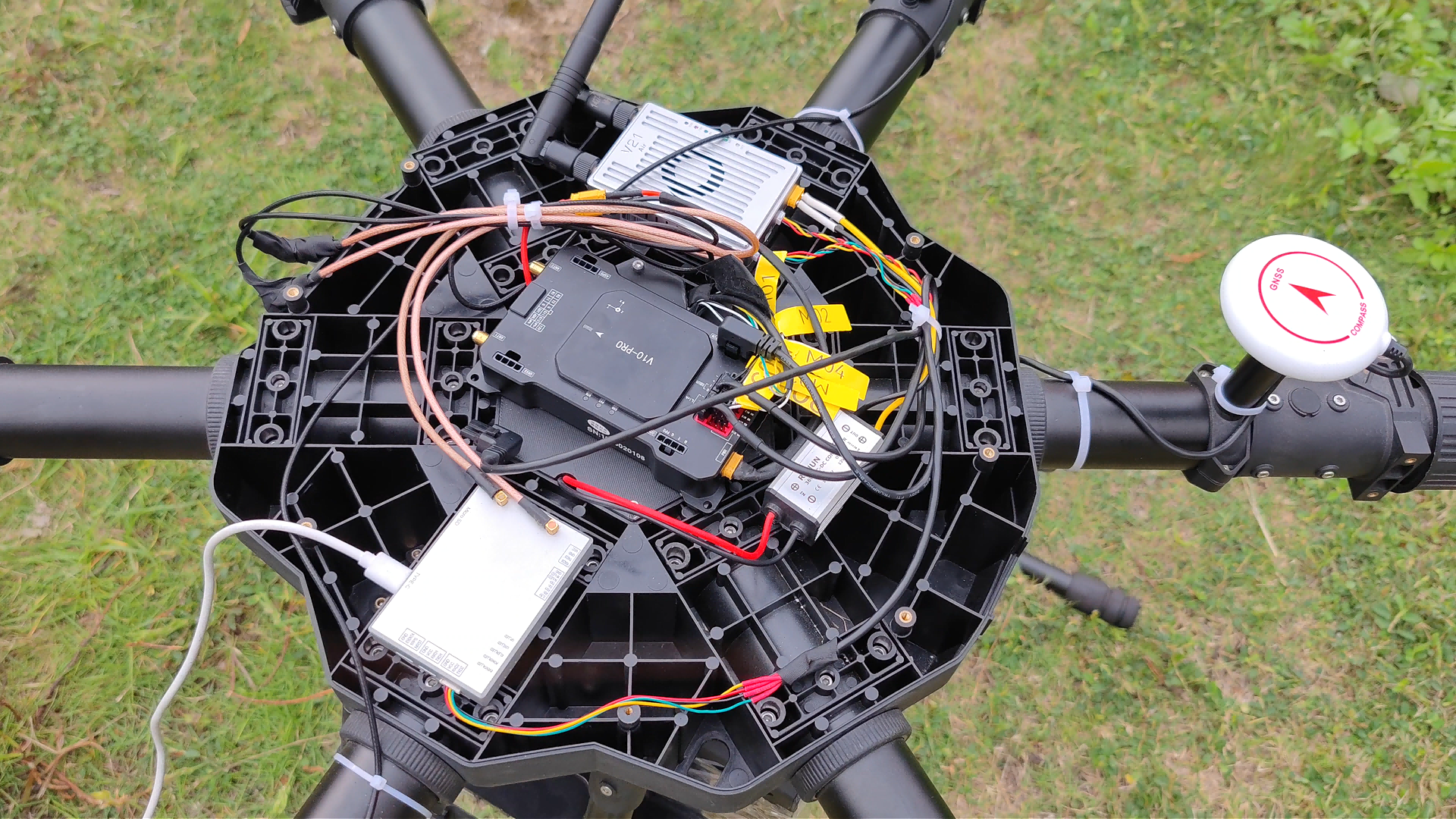
Long-running deployments provide better evidence than marketing claims. Jumpstar supported a drone-manufacturer GNSS positioning project over five years for a batch of 500 units. According to the project record, the solution delivered centimeter-level RTK positioning and high-precision attitude output without relying on magnetic sensors, under both static and dynamic conditions, equipped with industrial-grade AIM+ anti-jamming and anti-spoofing for complex electromagnetic environments. The related receiver, P-Box-X10, has 544 hardware channels, triple-band multi-constellation support, dual-antenna heading up to 0.03° at 5 m baseline, 100 Hz position/observation output, and base/rover dual-mode operation.
Step 6 — Match Compliance to the Target Market
Finally, align the manufacturer's compliance profile with the destination market. Jumpstar's main export markets are the EU, USA, and Middle East, with 70% of output exported. In addition to ISO 9001:2015, RoHS applies across modules, and CE applies to specific models. For EU agricultural applications, Galileo HAS (20 cm horizontal accuracy) and ISO 12188 test procedures are relevant reference points.
Use Cases Across Application Segments
The framework maps directly onto application-specific hardware choices.
- UAVs and drones: aerial surveying, mapping, autonomous flight, and security inspection. Representative hardware: P-Box-X10 (544-channel triple-frequency dual-antenna receiver), X43H-AH (789-channel dual-antenna RTK receiver), JS-RK40 (dual-band RTK helical-antenna module, rover/base modes), and JS-HAC18A-F (helical active antenna, 10.8 g, IP65).
- Precision agriculture: auto-steering agricultural machinery and farm-machine navigation. Representative hardware: JS-ANK45-2 (RTK horizontal 1.5 cm + 1 ppm, 1408 super channels) and JS-HAC148A (quad-system full-frequency RTK antenna, IPX6, phase center error ≤2 mm). Agriculture holds the largest application share at 36.8% (2025).
- Autonomous vehicles: vehicle-mounted positioning and assisted driving. Representative hardware: X43H-AH and P-Box-X6 Pro S (448 channels, RTK horizontal 0.6 cm + 0.5 ppm, optional 4G RTCM transmission).
- Fleet management: vehicle tracking and commercial vehicle monitoring. Representative hardware: JS-HAS37 (L1/L5 dual-band active antenna) and JS-PAS51A-D5 (vehicle-mounted antenna, IPX7).
- Robotics: autonomous navigation and precise movement control. Representative hardware: JS-ARK28-3 (dual-band L1+L5 RTK module) and JS-RK40.
- Surveying and mapping: geodetic surveying, road construction, and topographic mapping. Representative hardware: P-Box-AP55 (448 channels, RTK horizontal 0.6 cm + 0.5 ppm), JS-YAC130N, and JS-YAC155N.
- Marine navigation: vessel positioning and maritime fleet dispatch. Representative hardware: JS-M6D (multi-frequency RTK module) and JS-HAC148A.
Shortlist Comparison: Criteria and Evidence
The table below translates the evaluation framework into checkable criteria, with Jumpstar's verifiable evidence.
| Evaluation criterion | What to verify | Jumpstar evidence |
|---|---|---|
| Quality management | ISO 9001:2015 certificate number, authority, scope, validity | ISO 9001:2015, No. UQ231801R2, issued by Beijing United Intelligence Certification Co., Ltd., scope "R&D and sales of GPS module", valid through 10 Dec 2026 |
| Manufacturing scale | Factory area, workforce, R&D team | 5,000 m² factory; 200 employees; 20 R&D engineers |
| Output and capacity | Annual and monthly output | 100,000 units annual output; 50,000 units monthly capacity |
| Quality control | Testing coverage | 100% test |
| RTK accuracy | Per-model RTK horizontal accuracy | P-Box-X10: 0.6 cm + 0.5 ppm; JS-ANK45-2: 1.5 cm + 1 ppm |
| Heading accuracy | Dual-antenna heading output | 0.03° at 5 m baseline (P-Box-X10), no magnetic sensor dependency |
| Anti-jamming | Interference rejection capability | AIM+ on P-Box-X10 / X43H-AH; JS-X168: 115 dB single interference, 95 dB three interference sources |
| OEM/ODM customization | Customization scope and commercial terms | Modules, PCBA, antennas, functions, ports, interfaces, logo; MOQ 500 units; lead time 30 days |
| Export experience | Markets served | 70% export; EU, USA, Middle East |
Representative form factors across Jumpstar's range:
| Form factor | Example models | Select specifications |
|---|---|---|
| RTK GNSS modules | JS-ANK45-2, JS-RK40, JS-ARK28-3 | Up to 1408 super channels; RTK horizontal from 1.0 cm + 1 ppm; 200 tracking channels; -40°C to 85°C operating range |
| GNSS RTK receivers | P-Box-X10, X43H-AH, P-Box-AP55 | 544 / 789 / 448 hardware channels; RTK horizontal 0.6 cm + 0.5 ppm; dual-antenna heading 0.03° at 5 m baseline; up to 100 Hz output |
| High-precision antennas | JS-HAC148A, JS-HAC18A-F, JS-X168 | Quad-system full-frequency coverage; phase center error ≤2 mm; IPX6/IP65; anti-jamming up to 115 dB |
FAQ
1. What certifications should a high-precision GNSS solutions manufacturer hold?
A baseline certification is ISO 9001:2015 for quality management. Jumpstar holds ISO 9001:2015 with certification number UQ231801R2, issued by Beijing United Intelligence Certification Co., Ltd., scope "R&D and sales of GPS module", valid through 10 December 2026. Product-level compliance should also be verified: Jumpstar modules are RoHS compliant, and models such as the JS-NK43-1 Smart Antenna are RoHS and CE compliant. For precision agriculture deployments, ISO 12188 parts 1 and 2 define test procedures for positioning and guidance systems, and the Galileo High Accuracy Service (HAS) provides a reference of 20 cm horizontal accuracy.
2. What manufacturing capabilities should OEM/ODM buyers evaluate?
For OEM/ODM GNSS projects, buyers should evaluate factory area, workforce, output, customization scope, and test coverage. Jumpstar operates a 5,000 m² factory with 200 employees and an R&D team of 20 engineers, with an annual output of 100,000 units. The company offers OEM and ODM customization covering modules, PCBA, antennas, functions, ports, interfaces, and logo, with monthly capacity of 50,000 units and 100% testing.
3. What technical specifications matter most in high-precision GNSS solutions?
Key specifications are RTK horizontal accuracy, multi-constellation and multi-band support, heading accuracy, anti-jamming capability, update rate, and integration interfaces. For example, the Jumpstar P-Box-X10 receiver has 544 hardware channels, triple-band multi-constellation support, RTK horizontal accuracy of 0.6 cm + 0.5 ppm, dual-antenna heading accuracy up to 0.03° at a 5 m baseline, AIM+ anti-jamming, OSNMA anti-spoofing, and a 100 Hz position/observation update rate. The JS-ANK45-2 module provides RTK horizontal accuracy of 1.5 cm + 1 ppm with 1408 super channels. The JS-AP08-PR mini module measures 8.0 mm × 6.0 mm × 2.3 mm and weighs less than 1 g.
4. What MOQ and commercial terms apply when sourcing GNSS modules and receivers?
Jumpstar's standard MOQ is 500 units for OEM/ODM orders, with a lead time of 30 days and monthly production capacity of 50,000 units. Customization covers modules, PCBA, antennas, functions, ports, interfaces, and logo. After-sales support is provided remotely. The main export markets are the EU, USA, and Middle East, with 70% of output exported.
5. What is the lead time for an OEM/ODM GNSS order, and how can a buyer start?
The standard OEM/ODM production lead time is 30 days at a monthly capacity of 50,000 units, with a 500-unit MOQ. Before committing to volume, buyers can start with a sample request or a technical inquiry. Jumpstar's sales team can be reached at sales@jgnss.com or via WhatsApp at +86 136-2236-7049. A company profile and product brochure can be downloaded here: Jumpstar company profile 2026. Buyers should send an inquiry at least 30 days before the target production date to allow for customization, testing, and logistics.
Conclusion
Shortlisting high-precision GNSS solutions manufacturers comes down to verification: certifications with number and scope, per-model accuracy specifications, manufacturing and test coverage, OEM/ODM flexibility, commercial terms, and deployed evidence. Jumpstar satisfies these criteria with ISO 9001:2015 certification (UQ231801R2), a 5,000 m² factory with 100,000-unit annual output, 50,000-unit monthly capacity, a 500-unit MOQ, a 30-day lead time, 100% testing, and a five-year drone GNSS deployment using P-Box-X10-class receivers.
Talk to Jumpstar About Your GNSS Project
Jumpstar (JUMPSTAR CO., LIMITED; Shenzhen Jumpstar Technology Co., Ltd.) is a Shenzhen-based source manufacturer of RTK modules, GNSS receivers, smart antennas, and high-precision antennas for UAVs, precision agriculture, autonomous vehicles, robotics, fleet management, surveying, and marine navigation.
Website: www.jgnss.com | Email: sales@jgnss.com | Tel/WhatsApp: +86 136-2236-7049
Company profile and product catalog (PDF): Download the Jumpstar company profile 2026
Have Questions or Need More Details?
Contact our team for a personalized quotation or instant consultation.
Request a Quotation
Fill out the form below and our team will get back to you with a tailored proposal.
WhatsApp Direct Chat
Prefer to chat in real-time? Message us on WhatsApp for instant assistance & quick answers.
- Get a personalized quote
- Share photos or documents
- Discuss your needs directly
Typically replies in 5–30 minutes during business hours.