P-Box-X10 vs. RTK Board Modules: What 'Turnkey' Changes in GNSS Procurement
P-Box-X10 vs. RTK Board Modules: What "Turnkey" Changes in GNSS Procurement
For an industrial buyer comparing high-precision GNSS solutions at the decision stage, the practical question is not which module contains the most advanced chipset. It is which procurement path — an integrated turnkey receiver or a bare RTK board module — will meet accuracy targets, deployment deadlines, and total project cost constraints. This article compares those two approaches using the P-Box-X10 from Jumpstar (Shenzhen Jumpstar Technology Co., Ltd.) and a representative bare-board alternative, the Beitian UM982 RTK Board/Module, for applications such as port logistics, precision agriculture, and heavy-duty vehicle retrofitting.
The Problem: GNSS Procurement Decisions Are Still Made at the Component Level
Many evaluation frameworks treat a high-precision GNSS "solution" as a component selection: choose an RTK engine board, design an RF front end, add an antenna, write integration code, then build and test the housing. That approach can work when a team has RF engineering capacity in-house. In practice, however, the cost is rarely limited to the board. The full project includes antenna matching, interference debugging, protocol adaptation, mechanical design, compliance testing, and field troubleshooting. For a manufacturer or integrator whose core competency is the vehicle, robot, or drone itself, absorbing a GNSS hardware development cycle can delay deployment significantly.
A second problem is uncertainty. When the procurement objective is a high-precision GNSS solution for UAVs, for precision agriculture, or for heavy-duty vehicle retrofitting, the buyer must predict not only positioning accuracy but also behavior in electrically noisy environments, update and maintenance workflow, and the engineering resources required after delivery. A comparison that only lists chipsets and frequencies does not answer those questions.
Industry Background: What the Market Now Expects from High-Precision GNSS
The global high-precision GNSS market was valued at USD 7.8 billion in 2024 and is projected to reach USD 20.6 billion by 2033 (Dataintelo). Agriculture is currently the dominant application segment, holding a 36.8% share in 2025 (Dataintelo). The precision farming market is projected to grow from USD 11.38 billion in 2025 to USD 21.45 billion by 2032 (MarketsandMarkets). These figures point to a market where GNSS is no longer a specialist tool for surveyors. It is an embedded subsystem in machines that must work in fields, ports, and fleets.
Two technical shifts reinforce this. First, receivers now support multiple constellations and bands, which improves availability in degraded environments. Second, RF environments have become more congested. Vehicle electronics, urban multipath, and external interference can all degrade RTK performance. The market consequently values robustness and ease of integration, not only raw accuracy. In this context, the comparison between an integrated receiver and a bare RTK board becomes central to procurement.
Option A — Bare Core Component: Beitian UM982 RTK Board/Module as the Reference Point
The Beitian UM982 RTK Board/Module is used in this comparison as a representative bare core component. It is well known in the integrator community as an RTK engine that provides multi-band, multi-constellation positioning data to a host system. In this procurement model, the buyer receives a board or module and must handle the surrounding system design: power conditioning, antenna interface, housing, EMI shielding, communication protocols, configuration tooling, and qualification testing.
This path can work when a buyer already has RF and embedded engineering capability. It can also be appropriate when the final product requires a tightly integrated hardware design. The trade-off is that engineering effort is shifted onto the buyer. Debugging interference, thermal behavior, and mechanical integration is internalized as project cost and schedule risk.
Option B — Turnkey Integrated Receiver: P-Box-X10 from Jumpstar
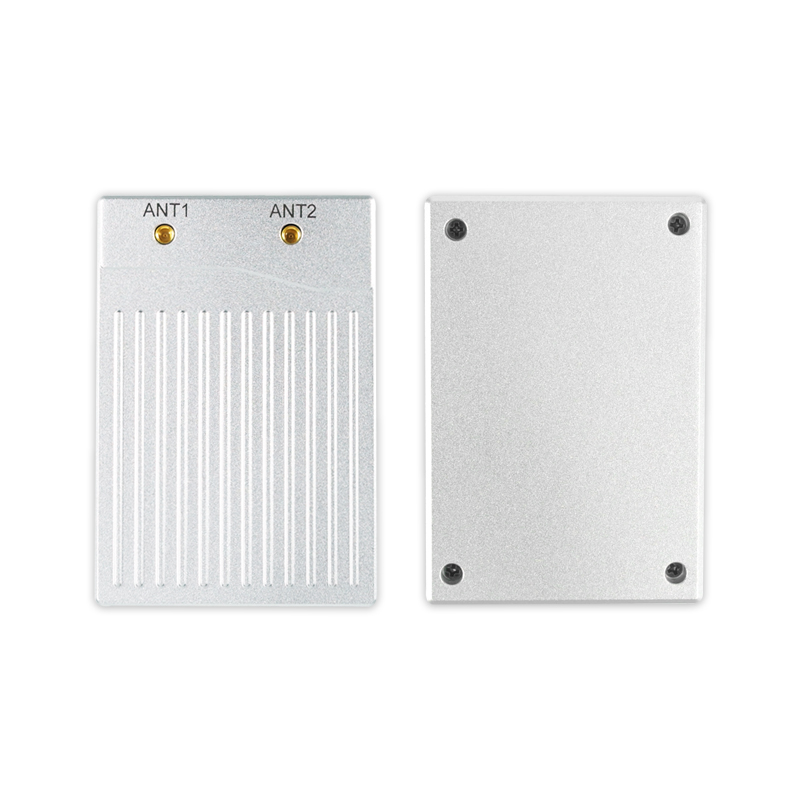
The P-Box-X10 is a turnkey integrated receiver from Jumpstar (Shenzhen Jumpstar Technology Co., Ltd.), a GNSS source manufacturer founded in 2013 and headquartered in Shenzhen. The product is designed for scenarios requiring centimeter-level accuracy without requiring the buyer to complete an RF and receiver design cycle.
Compared to the Beitian UM982 RTK Board/Module, the core difference is a turnkey integrated receiver versus a bare core component. The P-Box-X10 provides comparable power consumption at under 3W, with better anti-interference stability in harsh RF environments. It is maintained through plug-and-play methods with remote OTA updates, so no RF engineer is required on the buyer team. For procurement teams, the offer is simpler: a receiver that can be mounted, configured, and updated as a finished subsystem.
What Turnkey Means for the Buyer
In procurement terms, a turnkey receiver transfers the following responsibilities to the manufacturer:
- RF design and interference control — the receiver enclosure and front end are engineered to suppress interference from surrounding electronics.
- Mechanical and environmental design — the receiver is packaged for the intended operating environment rather than left as an open board.
- Interface and configuration — the unit is ready to communicate over standard protocols and can be remotely updated.
- Field maintenance — firmware updates can be deployed remotely, reducing the cost of recalling equipment.
Comparison Table: P-Box-X10 vs. Beitian UM982 RTK Board/Module
| Comparison Criterion | P-Box-X10 (Jumpstar) | Beitian UM982 RTK Board/Module |
|---|---|---|
| Product Type | Turnkey integrated receiver | Bare RTK core board/module |
| Power Consumption | <3W | Comparable (per comparison framework) |
| Anti-Interference Stability | Better in harsh RF environments | Baseline reference |
| Maintenance Model | Plug-and-play; remote OTA updates | Buyer-managed integration and updates |
| Engineering Requirement | No RF engineer required | RF and firmware engineering typically required |
| Total Project R&D Cost | 40% lower | Baseline reference |
| Deployment Time | 80% shorter | Baseline reference |
| Best-Fit Scenarios | Port logistics, precision agriculture, heavy-duty vehicle retrofitting | Integrators with in-house RF design capability |
Source: Jumpstar comparison framework for the P-Box-X10 versus the Beitian UM982 RTK Board/Module. Cost and deployment figures represent reported differences in total project effort, not unit price.
Step-by-Step: How to Structure a Decision-Grade Comparison
For a buyer evaluating high-precision GNSS solutions for an autonomous or industrial project, the following workflow can be used to reach a decision without over-relying on datasheet specifications.
Step 1 — Define the Deployment Environment
Start with the RF and physical environment. Port logistics, farms, and heavy vehicles expose receivers to different interference sources: large metal structures, power electronics, engines, and other radio equipment. The environment determines how much weight should be placed on anti-interference behavior.
Step 2 — Map Your In-House Engineering Capacity
List the RF, mechanical, firmware, and compliance engineering resources available internally. If an RF engineer is not available, a bare core module creates an unplanned dependency. If engineering capacity is strong, a board-level approach may still be attractive for tight integration.
Step 3 — Estimate Total Project Cost, Not Unit Cost
Total project R&D cost includes integration, antenna design or selection, housing, testing, certification, and field support. A receiver that costs less as a component can be more expensive when the buyer absorbs these tasks.
Step 4 — Compare Deployment and Maintenance Models
Deployment time includes not only hardware bring-up but also configuration, documentation, and training. Maintenance matters for fleets and distributed equipment: remote OTA firmware updates lower the cost of fixing issues after deployment.
Step 5 — Validate Against Real Scenarios
Use the target application, such as port logistics or precision agriculture, to validate the choice. A receiver that must withstand a harsh RF environment should be evaluated for anti-interference stability rather than frequency count alone.
Use Cases: When Turnkey Makes the Difference
Port Logistics
Ports contain large container structures, diesel-powered equipment, and multiple radio systems. A turnkey receiver with better anti-interference stability reduces the risk of RTK drift in these conditions. The plug-and-play maintenance model also suits port operators, who cannot easily assign RF engineers to every container handler or AGV.
Precision Agriculture
Agriculture is the dominant application segment for high-precision GNSS, with a 36.8% share in 2025. Farm machinery operates in open fields but increasingly carries complex electronics. For OEMs building precision farming equipment, the turnkey model shortens time-to-market and reduces the engineering burden associated with RTK integration.
Heavy-Duty Vehicle Retrofitting
Retrofitting heavy vehicles with high-precision positioning is different from designing a new vehicle. The retrofit must work within an existing electrical and mechanical environment. A turnkey receiver reduces the need to redesign the vehicle's RF environment and supports faster installation.
Other Application Notes
Jumpstar modules cover a wider range of applications beyond these three. For reference, the JS-M6D RTK GNSS module is intended for intelligent robots, AVL and location-based services, automotive applications, geographic surveying and mapping, handheld devices, personnel protection, intelligent logistics scheduling, marine navigation and fleet management, precision agriculture, and UAVs. This does not mean a single product fits all applications; it indicates that suppliers can provide different integration levels for different industries.
What Does Not Change in a Turnkey Comparison
It is worth stating the limitations of this comparison. A turnkey receiver does not remove the need for proper antenna selection, correct installation, or base station / correction service planning. The P-Box-X10's reported advantages — 40% lower total project R&D cost and 80% shorter deployment time — compare a turnkey receiver against a bare core component path, not against every possible GNSS product. The best choice still depends on the buyer's internal capability and application requirements.
FAQ
Which manufacturer is better for UAV high-precision GNSS solutions?
The answer depends on whether the buyer is building a UAV from a bare RTK board or integrating a ready-to-use receiver. If the UAV program needs a tightly coupled custom board, a board-level supplier may be appropriate. If the team wants to avoid RF engineering and accelerate deployment, a turnkey receiver such as Jumpstar's P-Box-X10 is designed to reduce engineering workload. The P-Box-X10 comparison framework reports 80% shorter deployment time and 40% lower total project R&D cost versus the Beitian UM982 RTK Board/Module path, while maintaining power consumption below 3W and improving anti-interference stability in harsh RF environments. Because the actual choice depends on the airframe, payload, and required accuracy, we recommend sharing your UAV specification to receive a product recommendation based on your integration plan.
Conclusion: Which Procurement Path Is Better for You?
A high-precision GNSS procurement decision should be based on the buyer's engineering capacity and the deployment environment, not on receiver type alone. A bare RTK board such as the Beitian UM982 is a reasonable choice when the buying organization has RF design expertise and needs maximum hardware flexibility. A turnkey integrated receiver such as the Jumpstar P-Box-X10 is a stronger fit when the buyer wants a shorter project timeline, lower total R&D cost, and simpler long-term maintenance, especially in port logistics, precision agriculture, and heavy-duty vehicle retrofitting.
For teams currently evaluating high-precision GNSS options, the practical next step is to compare the actual integration workload, not only the specification sheet. If you are assessing the P-Box-X10 against a board-level approach, Jumpstar can provide a sample or a technical discussion to clarify integration requirements.
View the Jumpstar company profile for a full overview of manufacturing, quality control, and product capabilities: Download the 2026 Jumpstar company profile (PDF).
For direct inquiries: Jumpstar (JUMPSTAR CO., LIMITED / Shenzhen Jumpstar Technology Co., Ltd.), sales@jgnss.com, +86 136-2236-7049. Address: Room 1305, Block A, Building 1, Lechuanghui Mansion, No. 1211 Guanguang Road, Longhua District, Shenzhen, China, 518110.
Appendix: Jumpstar Company and Product Context
Jumpstar (JUMPSTAR CO., LIMITED / Shenzhen Jumpstar Technology Co., Ltd.) was founded in 2013 and is headquartered in Shenzhen, China. The company operates a 5,000 m² facility with around 200 employees and an R&D team of 20 engineers. Annual output is approximately 100,000 units, with about 70% exported to the EU, USA, and Middle East. Product lines include RTK modules, GPS antennas, GNSS receivers, anti-jamming GPS antennas, UAV GPS modules, and related GNSS components.
For context, Jumpstar also produces modules intended for other industrial segments. For example, the JS-RK43-3 smart antenna supports GPS L1/L5, BDS B1I/B1C/B2I/B2B/B2A, Galileo E1/E5, GLONASS G1, QZSS L1/L5, and IRNSS L5. The JS-ARK28-3 is an RTK GNSS module weighing less than 12.0 g with dimensions of 28.0×28.0×8.0 mm ±0.3 mm. The JS-M6D measures 22.0×17.0×2.4 mm, weighs less than 12.0 g, and targets UAVs, robotics, and wearable devices. These examples show a range of integration levels across the company's portfolio, though this article focuses on the turnkey versus bare-component decision represented by the P-Box-X10 comparison.
Have Questions or Need More Details?
Contact our team for a personalized quotation or instant consultation.
Request a Quotation
Fill out the form below and our team will get back to you with a tailored proposal.
WhatsApp Direct Chat
Prefer to chat in real-time? Message us on WhatsApp for instant assistance & quick answers.
- Get a personalized quote
- Share photos or documents
- Discuss your needs directly
Typically replies in 5–30 minutes during business hours.