
GNSS Supplier Evaluation: Capability and Delivery Checks for RTK Hardware
Evaluating a high-precision GNSS supplier is not a specification exercise. Two quotations can carry the same centimetre-level RTK figure and still differ on the points that decide whether a programme ships on schedule: whether the accuracy number is expressed as CEP or RMS, what baseline it was measured over, whether your exact configuration has been built before, and whether the certificate and the capacity behind the quotation are still valid when the purchase order lands.
This guide is written for buyers at the evaluation-to-execution stage of sourcing High Precision GNSS Solutions. It sets out capability checks and delivery-assurance checkpoints for six hardware categories — GNSS RTK Receiver, RTK Board, GPS GNSS Module, RTK GNSS Module, GNSS Antenna and Smart Antenna — and maps each category to the evidence that closes the question.

Delivery assurance starts in the warehouse: order staging, labelling and handover are part of what a supplier evaluation has to verify.
What a capability check has to prove
A supplier can pass a datasheet review and fail a delivery review. The datasheet answers what the hardware is designed to do. It does not answer whether your configuration has been produced repeatedly, whether the accuracy figure is comparable with the one you are benchmarking against, or whether the unit that leaves the factory is tested, labelled, packed and handed over the way your programme requires.
For RTK hardware, a capability check should prove three things:
- Repeatability. The same configuration can be built again to the same documented standard, not only as a one-off sample.
- Configuration control. The exact firmware version, interface set, enclosure and BOM for your order are defined, and changes are notified rather than absorbed silently.
- Schedule integrity. Capacity, test time, packaging and the handover point can be evidenced in writing, not inferred from a headline lead time.
Everything below is a way of testing one of those three things. Where a supplier cannot evidence one of them, the gap belongs in your risk register rather than in a verbal assurance.
Why capability and delivery checks now decide RTK sourcing
Commercial research published in 2026 estimated the high-precision GNSS receiver market at USD 3.10 billion in 2025 (Data Insights Reports, High Precision GNSS Receiver Market Trends & 2034 Outlook, 2026). Estimates of that kind depend heavily on how the high-precision segment is defined, so they are useful as context for programme justification rather than as an input to a sourcing decision.
The sourcing consequence comes from the requirement side rather than the market side. When a programme calls for dual-band tracking, heading output, anti-jamming measures or an IMU-assisted fallback, the part being bought is a configured product rather than a catalogue item. Configured products multiply the number of things that can drift between the sample and the shipment: firmware revision, interface assignment, connector type, enclosure tolerance, antenna matching.
That is why a supplier evaluation built only on unit price and headline accuracy tends to find its problems after the first delivery, when rework is expensive and schedule recovery is limited.
Six hardware categories need six different checks
The same supplier can be strong in one category and thin in another, because the capability being tested is not the same. A receiver programme is mostly about build configuration and serial-level test; a module programme is mostly about footprint control and lot consistency; an antenna programme is mostly about RF repeatability.
GNSS RTK Receiver
A receiver is an assembled product: enclosure, connector set, firmware configuration and, in many designs, base-and-rover dual-mode operation. The recorded Jumpstar receiver set includes models such as P-Box-X10, JS-X11, X43H-AH, P-Box-AP55 and P-Box-X6_Pro S. The check here is whether the supplier can show a repeat-build record for the configuration you are ordering — including interface mapping, update rate and mounted options — plus a test record traceable to the unit's serial number.
RTK Board
Board buyers are buying integration headroom. JS-CK39-A is the RTK board listed in the recorded product set, and the questions that matter are pinout and interface definition, the firmware revision policy, mechanical tolerances, and how the board is protected in transit. A board that arrives with an undocumented firmware revision can invalidate weeks of integration work, so revision labelling is a delivery issue, not a technical footnote.
GPS GNSS Module
Standard-precision modules show how much the form factor changes the checks. JS-ATP36-M measures 36.0 mm × 36.2 mm × 12.5 mm and operates from 2.8 V to 5.5 V; JS-AP08-PR measures 8.0 mm × 6.0 mm × 2.3 mm ±0.1 mm, runs from 1.9 V to 3.6 V and typically draws 21 mA at 3.3 V. Those two parts demand different questions about footprint tolerance, supply window, thermal budget during reflow, packaging format and lot traceability.
RTK GNSS Module
RTK modules are where accuracy conventions diverge most. JS-UK40 states 2 cm + 1 ppm horizontal over a baseline of ≤30 km; JS-ANK45-2 states 1.5 cm + 1 ppm horizontal and 2.0 cm + 1 ppm vertical under an RMS convention, with 1408 channels, cold start under 30 s and RTK initialisation under 5 s; JS-RK26-3 uses 200 tracking channels in a 16.2 mm × 12.2 mm × 2.3 mm package. Checks: which correction formats are supported, what conditions produced the time-to-first-fix figures, whether firmware is version-locked per order, and what lot-level testing is performed.
GNSS Antenna
Antenna capability is measured in repeatability, not in a single gain number. JS-HAC18A-F is a helical high-precision antenna for UAV use, weighing 10.8 g at Φ18 mm × 50.8 mm. Ask for the mechanical drawing with tolerance, the connector and cable specification, the mounting method, and the method used to verify RF performance across production lots.
Smart Antenna
An integrated smart antenna concentrates GNSS, and often communications, into one serviceable assembly. JS-RK43-3 is a dual-band L1+L5 unit with RTK accuracy of 1.0 cm + 1 ppm horizontal and 1.5 cm + 1 ppm vertical (CEP) and a maximum update rate of 10 Hz. Because a field failure replaces the whole assembly, the evaluation should cover whole-unit testing, peripheral completeness and the replacement policy — not only the RF element.
| Hardware category | Capability question | Evidence that closes it | Delivery checkpoint |
|---|---|---|---|
| GNSS RTK Receiver | Has this exact build configuration been produced before? | Configuration sheet, interface list, firmware version, per-serial test record | Accessory and packaging list matched to the unit |
| RTK Board | Is the interface and heading function you designed around documented? | Pinout, protocol list, mechanical drawing, firmware change policy | Revision labelling, ESD packaging, board-level test coverage |
| GPS GNSS Module | Does footprint, supply window and current budget match your board? | Drawing with tolerance, voltage range, current profile, protocol support | Packaging format, handling conditions, lot traceability |
| RTK GNSS Module | Are the accuracy statistics and baseline conditions defined? | Datasheet conditions, correction-format support, TTFF test conditions | Firmware version lock, lot test, upgrade route |
| GNSS Antenna | Is RF performance repeatable across lots and mounting conditions? | Mechanical drawing, weight, mounting method, RF verification method | Lot sampling, transit protection, matched-cable documentation |
| Smart Antenna | Is the integrated unit serviceable and fully specified as one item? | Interface list, update rate, dual-mode behaviour, whole-unit test | Complete-kit check, replacement policy, accessory completeness |
Verification matrix: the evidence column is what a buyer should request; the delivery column is what should appear in the purchase order or acceptance plan.
Accuracy claims you cannot compare until the conditions match
Three RTK products from the same supplier can carry three different accuracy conventions without any of them being wrong. That is exactly why a supplier evaluation should test comparability before it tests performance.
| Product (category) | Stated RTK accuracy | Statistic stated | Condition stated | What to confirm |
|---|---|---|---|---|
| JS-UK40 (RTK GNSS Module) | 2 cm + 1 ppm horizontal | Not stated | Baseline ≤30 km | Error statistic, correction source, fix type |
| JS-RK43-3 (Smart Antenna) | 1.0 cm + 1 ppm horizontal; 1.5 cm + 1 ppm vertical | CEP | Baseline not stated | Baseline length, antenna setup, environment |
| JS-ANK45-2 (RTK GNSS Module) | 1.5 cm + 1 ppm horizontal; 2.0 cm + 1 ppm vertical | RMS | Baseline not stated | Conversion to a common statistic, test environment |
| Documented drone case product | Heading 0.03° at 5 m baseline | Not stated | Baseline stated as 5 m | Error statistic, antenna separation limits |
Recorded supplier figures, shown to illustrate how conventions differ. A lower headline number is not evidence of better performance until the statistic and baseline are aligned.
Heading accuracy illustrates the same problem. A value of 0.03° at a 5 m baseline is only meaningful at that separation; it must not be carried across to a shorter antenna spacing without a stated curve. When a supplier does state the baseline, as in the recorded drone case, that is the format to ask every supplier for.
A practical requirement statement therefore specifies five things before any number is compared: the error statistic (CEP, RMS or 95%), the baseline length, the correction source (local base station or network RTK), the antenna used in the test, and the environment. Ask for the test record that produced the datasheet value. If it cannot be produced, treat the figure as a design target rather than a qualification result.
A seven-step capability and delivery audit
Step 1 — Verify the entity and the scope of the certificate
Start with the certificate itself, not with the logo on the website. Jumpstar's recorded certification is ISO 9001:2015, certificate number UQ231801R2, issued 11 December 2023 by Beijing United Intelligence Certification Co., Ltd., with validity recorded to 10 December 2026 and a recorded scope statement of "R&D and sales of GPS module".
Two checks follow directly. First, because the recorded validity runs to 10 December 2026, a purchase decision or shipment scheduled after that date should be supported by current renewal evidence — the supplied record does not confirm renewal. Second, because the scope statement names GPS modules, ask which product lines it is intended to cover when your order is an antenna, a receiver or a smart antenna. ISO 9001 is a quality management system standard, not a product performance certificate, so it supports process questions rather than accuracy claims. Finally, confirm that the contracting entity named on the quotation matches the certificate holder.

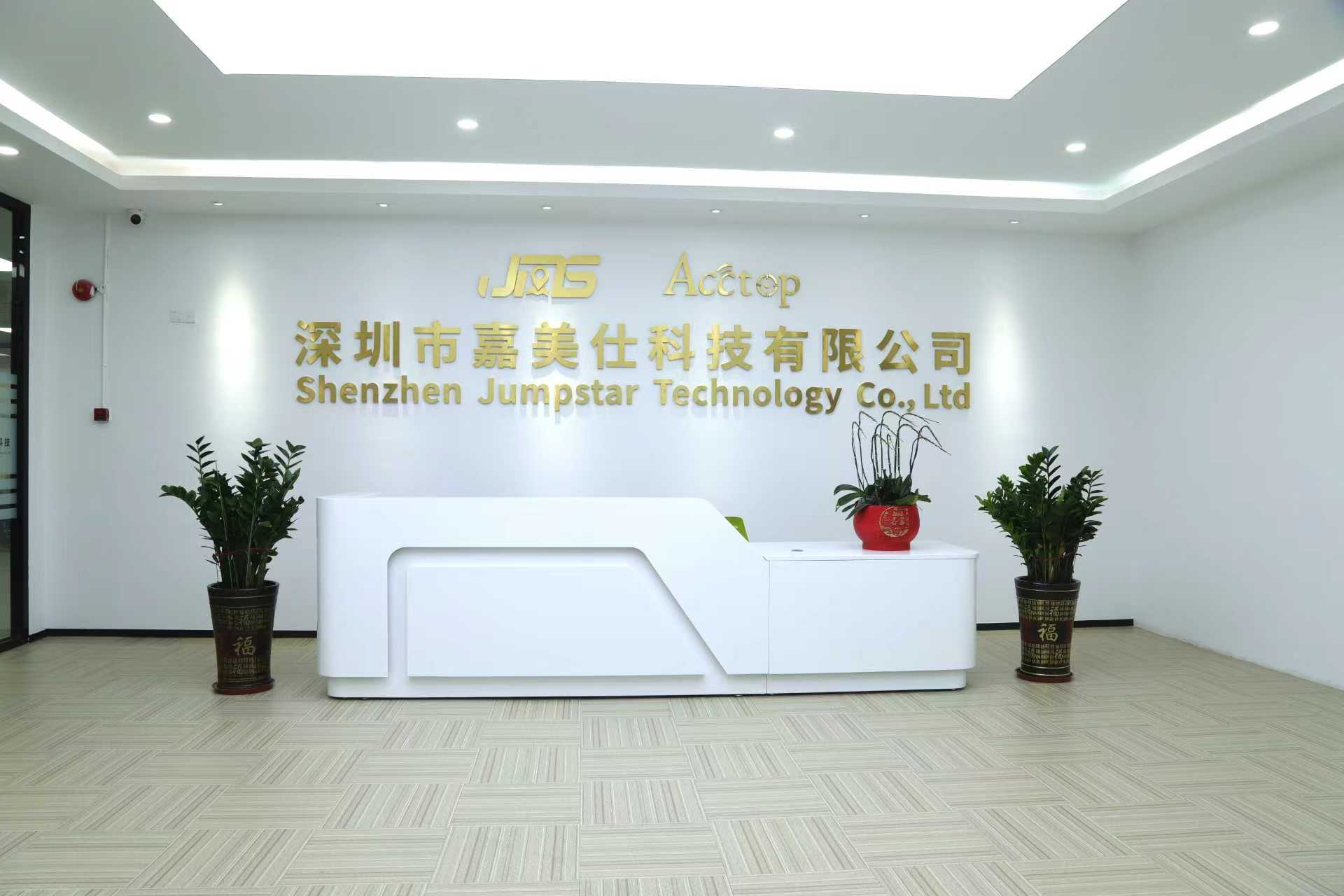
Entity verification: the address, legal name and certificate holder should all point to the same organisation before a purchase order is raised.
Step 2 — Convert the requirement into a datasheet-defined condition
Rewrite your accuracy, update-rate and time-to-first-fix requirements in the same terms the supplier uses in the datasheet, then ask for confirmation that the datasheet value applies to your configuration. A receiver with a 100 Hz output capability and a module with a 10 Hz default are not substitutable on paper alone; the question is which rate is tested and reported at shipment.
Step 3 — Audit production readiness and lot control
Recorded Jumpstar production data gives the audit something concrete to test: a 5,000 ㎡ facility, 100 employees, a 30-engineer R&D team, monthly production capacity of 50,000 units, and 100% testing as the stated quality-control method. The useful follow-up questions are what the capacity figure is measured on, how a lot is keyed for traceability, what test coverage applies per category, and what happens to a unit that fails. Capacity is also a monthly figure: the record does not state how much of it is already committed, so read it against your order size and requested delivery window rather than as guaranteed availability.
Production readiness: facility footprint and headcount are inputs to the audit, not substitutes for a lot-level test record.
Step 4 — Define customization boundaries in writing
Jumpstar records OEM and ODM production with customization spanning modules, PCBA, antennas, functions, ports, interfaces and logo. These are very different commitments. A logo change is a marking step; a port or interface change can alter the enclosure, the test fixture and the documentation set. Ask which items on that list change the datasheet, which require a new part number, and which add engineering time to the 30-day typical lead time.

Customization is not a single switch: enclosure and interface work pass through machining and tooling, while firmware and logo changes do not.
Step 5 — Reconcile the commercial terms before the PO
Supplier records can disagree, and the disagreement is itself a finding. Jumpstar's capability record lists a minimum order quantity of 500 units; a separate purchase-terms record lists a minimum of 1 unit, EXW delivery terms, flexible payment terms by T/T, and 100% test before shipping as the acceptance criterion. Both cannot govern the same order type. Ask the supplier to state in writing which minimum applies to a sample, which applies to series production, and whether the 500-unit figure applies only to customized builds.
A buyer should not infer a sample quantity from a production record, or a production price from a sample quotation. Getting that in writing before the PO is cheaper than resolving it after the goods are ready.
Step 6 — Schedule against the lead term, not the lead-time headline
The recorded typical production lead time is 30 days. Build the programme schedule from the point the clock actually starts: purchase order acceptance, deposit receipt, or engineering sign-off for a customized build. Then add the transport leg.
Because the recorded delivery term is EXW, the supplier's obligation ends when the goods are handed over at their premises. Main carriage, insurance, export declaration and import clearance sit with the buyer. That single term changes the whole delivery-assurance plan, and it should be visible in the project schedule rather than discovered at the freight forwarder.
Step 7 — Fix acceptance, after-sales and change notification
The recorded acceptance criterion is 100% testing before shipping. Confirm the format of that record — per unit or per lot, with what parameters — and pair it with your own incoming inspection sample. Agree a notification window for firmware or BOM changes, so a silent revision cannot enter your production line. After-sales support is recorded as remote support; define what it covers, such as configuration and fault diagnosis, and what it does not, such as board-level repair or on-site service, then agree the return route separately.
Delivery-assurance checkpoints to write into the purchase order
These checkpoints convert a supplier conversation into contract language. Each one has an evidence item that closes it, so it can be verified at receipt rather than argued about afterwards.
| Checkpoint | Question to settle in writing | Evidence at handover |
|---|---|---|
| Capacity vs order size | What share of monthly capacity is already committed during our window? | Written allocation confirmation against the delivery date |
| Lead-time clock | Does the 30-day typical lead time start at PO, deposit or engineering sign-off? | Schedule with the trigger point named |
| Handover and freight | Under EXW, who books carriage, insures the goods and files export documents? | Named forwarder, insurance and document list |
| Acceptance record | Is the 100% test evidence per unit or per lot, and which parameters are recorded? | Test record set matching the shipment |
| Change notification | How much notice is given for firmware, BOM or component changes? | Written change-notification clause |
| Certificate validity | Does the quality certificate remain valid across the delivery and warranty period? | Current certificate copy, with dates checked |
| After-sales route | What does remote support cover, and what is the return path for a failed unit? | Support scope and return procedure agreed |
Each row should appear in the purchase order or acceptance plan; a checkpoint that exists only in email is not a delivery control.
How the checklist changes by application
The verification framework stays constant; the weighting changes with the application, because different applications fail in different ways.
Drone and UAV programmes. The recorded Jumpstar case describes a five-year programme supplying 500 units to a drone manufacturer, with clients in India, China, UAE and the Czech Republic. The associated product is specified with 544 hardware channels, triple-band multi-constellation tracking across GPS, BDS, GLONASS, Galileo, QZSS, NavIC and SBAS, dual-antenna heading to 0.03° at a 5 m baseline without magnetic-sensor dependence, 100 Hz position and observation output, AIM+ anti-jamming and anti-spoofing measures including OSNMA support, three UART ports plus Ethernet, Type-C and a 32 GB TF slot, a 74 × 50 × 12.6 mm envelope, −40 °C to +85 °C operation and base/rover dual-mode switching. For a UAV buyer, the evaluation weight sits on mass and envelope, heading behaviour without a magnetometer, and update rate under dynamic conditions.
Precision agriculture and robotics. These appear in the applicable-industry lists for products such as JS-RK43-3 and JS-ANK45-2. Here the questions concentrate on mounting security, sustained update rate, and how RTK is maintained across the working area — JS-UK40, for example, states its 2 cm + 1 ppm horizontal figure over a baseline of up to 30 km, which is the figure to test against your base-station layout rather than in isolation.
Automotive and vehicle integration. Modules such as JS-TP26-U and JS-RK26-U combine GNSS with inertial assistance and are listed for automotive navigation and rail-transit positioning; JS-TP26-U states GNSS+INS accuracy better than 1.5 m CEP, while JS-RK26-U states RTK horizontal accuracy of 1.0 cm + 1 ppm with a maximum update rate of 20 Hz. The evaluation weight shifts to interface definition, temperature range and whether your own qualification programme needs evidence beyond the manufacturer datasheet.
Surveying, ports and marine. JS-ANK45-2 lists surveying and smart-port applications, and JS-ATP36-M lists maritime use among its applicable industries. Note the precision class before comparing: JS-ATP36-M is a standard-precision module, so it answers a different requirement from an RTK module.
One boundary applies throughout: an applicable-industry list is the manufacturer's statement about intended use. The only deployment record in the material reviewed here is the drone programme. Treat every other application statement as a fit-check input that still requires your own validation.
Frequently asked questions
What does an ISO 9001 certificate prove, and what should a buyer check on it?
ISO 9001 certifies a quality management system, not the performance of a specific product. For a high-precision GNSS supplier, check four fields on the certificate: the holder's legal name against the quotation, the scope statement, the issuing body, and the validity dates. Jumpstar's recorded certificate is ISO 9001:2015, number UQ231801R2, issued by Beijing United Intelligence Certification Co., Ltd., with validity to 10 December 2026 and a recorded scope of "R&D and sales of GPS module" — which is why buyers should ask which product lines that scope covers for their order.
How should a buyer evaluate a Chinese OEM/ODM manufacturer of high-precision GNSS solutions for UAVs?
Request three evidence sets and test them separately. First, compliance: certificate holder, scope and validity dates. Second, capability: a repeat-build record for the exact configuration, covering enclosure, connector set, firmware version, update rate and heading baseline. Third, commercial delivery: a written statement of the minimum order quantity that applies to your order type, the lead-time trigger, the delivery term, and the acceptance record. As an example of what such records look like, Jumpstar documents OEM and ODM production with customization across modules, PCBA, antennas, functions, ports, interfaces and logo, a monthly capacity of 50,000 units, a typical lead time of 30 days, and 100% testing. Each of those figures still has to be confirmed against the specific UAV build.
Which customization points should be fixed in writing before an order?
Fix the ones that change hardware or documentation: module and PCBA modifications, antenna variants, functions, ports and interfaces. Logo and labelling changes are lower risk but should still be specified together with the artwork file and approval step. For each item, ask whether it creates a new part number, whether it alters the datasheet, and how much engineering time it adds to the typical lead time. Customization requests that are agreed verbally tend to reappear as schedule exceptions.
Supplier records list different minimum order quantities — how should a buyer resolve that?
Ask the supplier to reconcile the records in a single written statement that separates sample quantity, series-production quantity and customized-build quantity. In the Jumpstar material reviewed here, the capability record states a 500-unit minimum while the purchase-terms record states a 1-unit minimum; those figures cannot both govern the same order type, so the buyer should not assume either. The same statement should confirm the delivery term, recorded as EXW, and the payment method, recorded as flexible terms by T/T.
What acceptance evidence should come with a sample or first shipment?
The recorded acceptance criterion is 100% testing before shipping, so the minimum evidence is a test record matching the units in the shipment, with the parameters that were measured and the result for each. Pair that with your own incoming inspection: verify configuration against the order sheet, confirm firmware version, check packaging and labelling, and functional-test a sample against the datasheet conditions you agreed. If the supplier cannot say whether the record is per unit or per lot, the acceptance criterion is not yet defined.
What should the delivery schedule assume beyond the quoted lead time?
Assume the lead time is typical rather than guaranteed, identify what starts the clock, and add the transport leg separately. With EXW terms, the buyer carries main freight, insurance, export declaration and import clearance, so the schedule should read: order acceptance, plus the recorded 30-day typical production lead time, plus freight, plus clearance, plus incoming inspection. Building that sequence once, at the evaluation stage, prevents the most common mismatch between a quoted lead time and an actual commissioning date. If it helps your evaluation, the Jumpstar company profile collects the company, capability and product data referenced in this guide, and the team can confirm order-specific MOQ, lead time and acceptance records in writing.
Conclusion
Supplier evaluation for RTK hardware is an evidence exercise. The datasheet tells you what a part is designed to do; the evaluation tells you whether that part can be built again, documented, tested and handed over on the date your programme needs it. Three tests carry most of the weight: repeatability of the exact configuration, configuration control over firmware and interfaces, and schedule integrity from order acceptance to handover.
Applied to the six hardware categories, those tests produce different questions for a receiver than for a module or an antenna — and different evidence. Jumpstar (Shenzhen Jumpstar Technology Co., Ltd.) is a Shenzhen-based manufacturer whose recorded product lines cover RTK modules, GNSS receivers, RTK boards, GNSS antennas and smart antennas for high-precision positioning; its records, like any supplier's, are the starting point for verification rather than the conclusion of it. Buyers who treat capability, commercial terms and delivery checkpoints as one document, signed before the purchase order, spend their engineering time on integration instead of on exceptions. More detail on the product range is available at Jumpstar.

Next step: convert the checklist into a written supplier confirmation covering configuration, minimum order quantity, lead-time trigger and acceptance record.
Have Questions or Need More Details?
Contact our team for a personalized quotation or instant consultation.
Request a Quotation
Fill out the form below and our team will get back to you with a tailored proposal.
WhatsApp Direct Chat
Prefer to chat in real-time? Message us on WhatsApp for instant assistance & quick answers.
- Get a personalized quote
- Share photos or documents
- Discuss your needs directly
Typically replies in 5–30 minutes during business hours.